



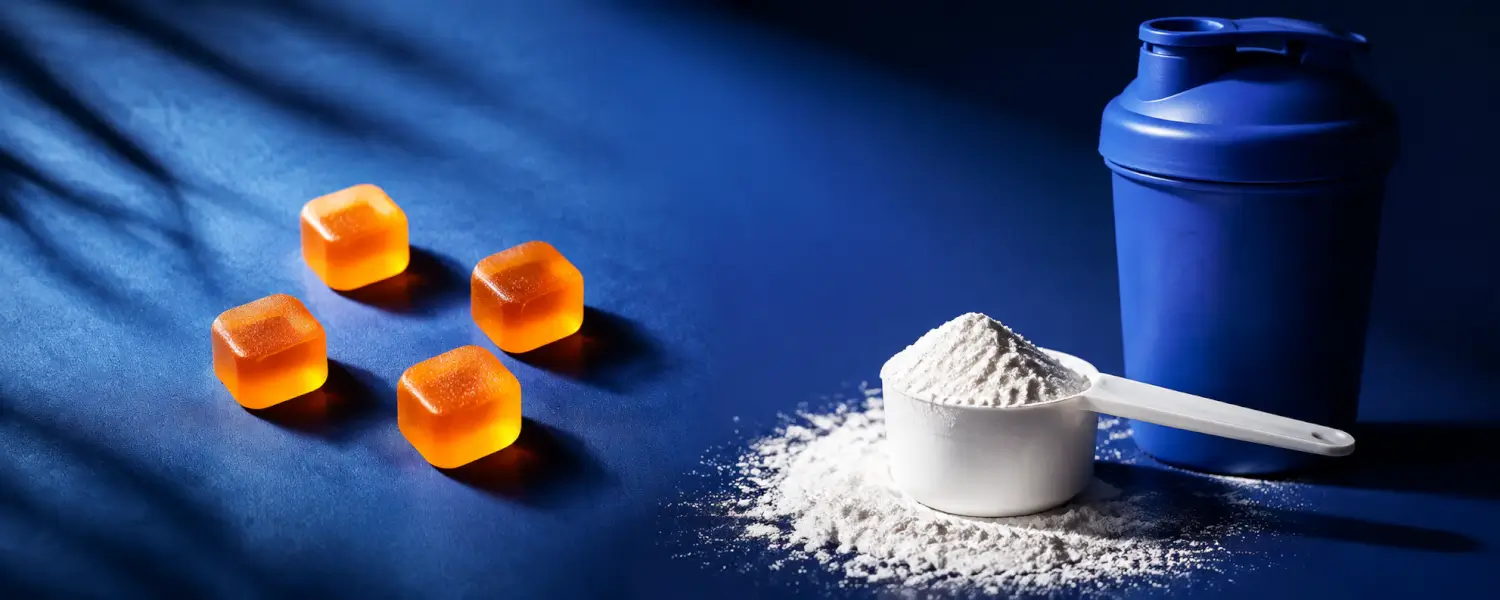
Creatine gummies vs powder: the short answer
If both products provide the same daily amount of creatine monohydrate, the format is unlikely to be the decisive performance variable. For most shoppers, powder is the rational default: it usually has fewer ingredients, makes the dose easy to adjust, and costs less per gram. Gummies make sense when a pre-measured, portable serving solves a real adherence problem.
That conclusion is about the purchase, not a promise that one format will change your body faster. The National Institutes of Health notes that creatine can support repeated short bursts of high-intensity effort, such as lifting or sprinting, but individual responses vary. Most of the evidence is built around creatine monohydrate, not around a gummy delivery system.
- Buy powder if you want the simplest formula and lowest cost per effective dose.
- Buy gummies if you regularly skip powder because you travel, dislike mixing it, or cannot tolerate its texture.
- Skip either product if the label does not disclose creatine per full serving, the seller makes implausible absorption claims, or the delivered cost is unclear.
Commercial details and availability were checked on September 3, 2026. Prices can change at checkout.
First compare the creatine dose, not the serving format
A gummy count is not a dose. A tub size is not a dose either. The useful comparison is grams of creatine monohydrate per complete daily serving. A 2021 review from the International Society of Sports Nutrition concluded that daily intake of roughly 3 to 5 grams can be effective and that a loading phase is not required. Loading can saturate muscle stores faster, but consistent daily use reaches the same destination more gradually.
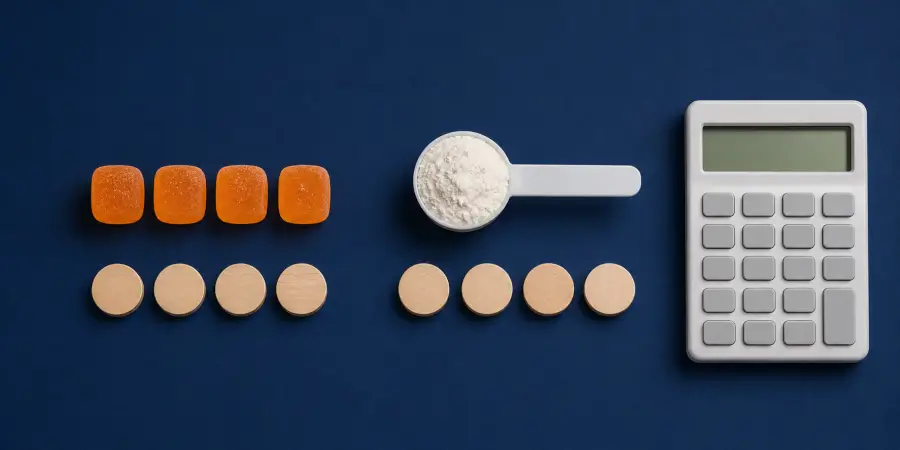
This immediately exposes a common shopping trap. A bottle may contain 120 gummies, but if four are needed to supply 5 grams, it contains 30 full servings. A 200-gram powder used at 3 grams per day contains about 66 servings. Neither number is automatically better until you compare the labeled dose, days of use, and total delivered price.
Creatine monohydrate also remains the best-studied form. Terms such as nano, micronized, buffered, rapid absorption, or advanced matrix may describe processing or marketing, but they do not replace the need to disclose the actual creatine amount. Micronization may improve how a powder disperses. It does not by itself prove greater strength gains.
What changes when creatine becomes a gummy?
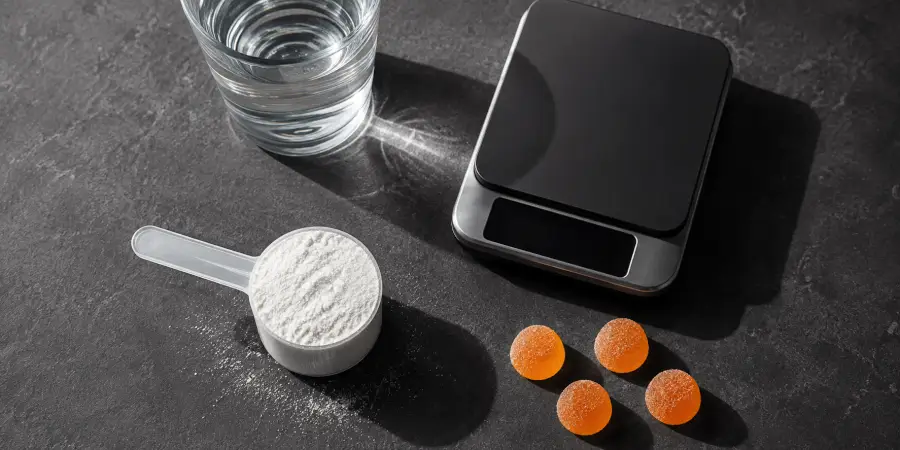
The active ingredient can be the same, but the product around it changes. A basic powder can be a single ingredient. A gummy needs a structure, flavor, acidity control, and sweetening system. Some formulas add botanicals. That is not automatically bad, but it gives you more label to inspect and more variables if you are sensitive to a sweetener or added ingredient.
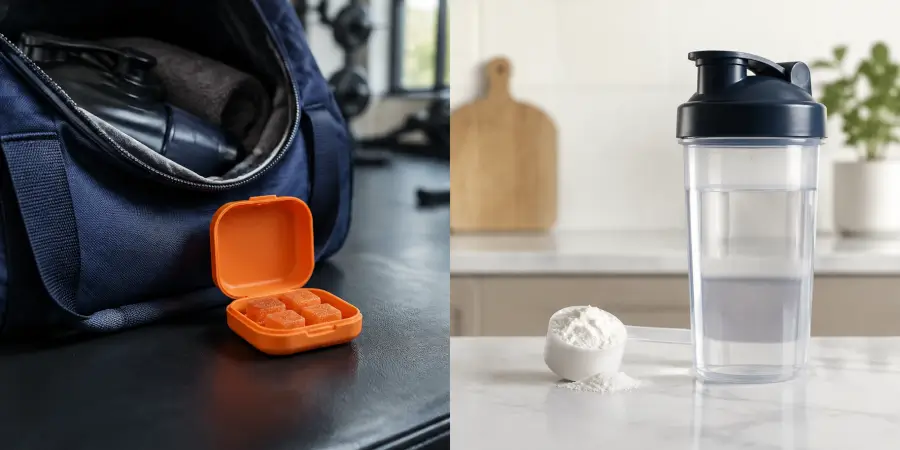
Gummies also turn a daily powder habit into something easy to carry. There is no scoop, shaker, dust, or gritty residue. The tradeoff is that a full evidence-aligned serving may require several pieces. If the label says four gummies, taking one is not the advertised dose.
Heat is another practical issue. Gummies can soften or stick together in a car, gym bag, or mailbox. Powder generally travels well when kept dry and sealed, although carrying loose powder can be inconvenient. The best format is the one whose storage rules fit your actual day.
Powder wins on formula control and value
Powder gives buyers three advantages. First, single-ingredient options are common. Second, you can measure a specific amount instead of accepting a fixed gummy count. Third, manufacturing a flavored chew generally adds cost that does not add creatine.
That flexibility requires a small amount of effort. A heaped household teaspoon is not a precise unit, and scoops differ between products. Use the supplied measure according to the label or weigh the amount once so you understand what the serving looks like. Mixability is a preference, not an efficacy test; a product does not need to disappear instantly in cold water to contain creatine monohydrate.
Powder is especially sensible for someone already making a shake or drinking water around training. If you resent mixing, repeatedly forget the tub, or travel without a shaker, the cheaper format can become false economy. A product unused in a cupboard has no practical value.

Three TBS products, compared as purchases
EcoWise Creatine Monohydrate Gummies: the convenience option
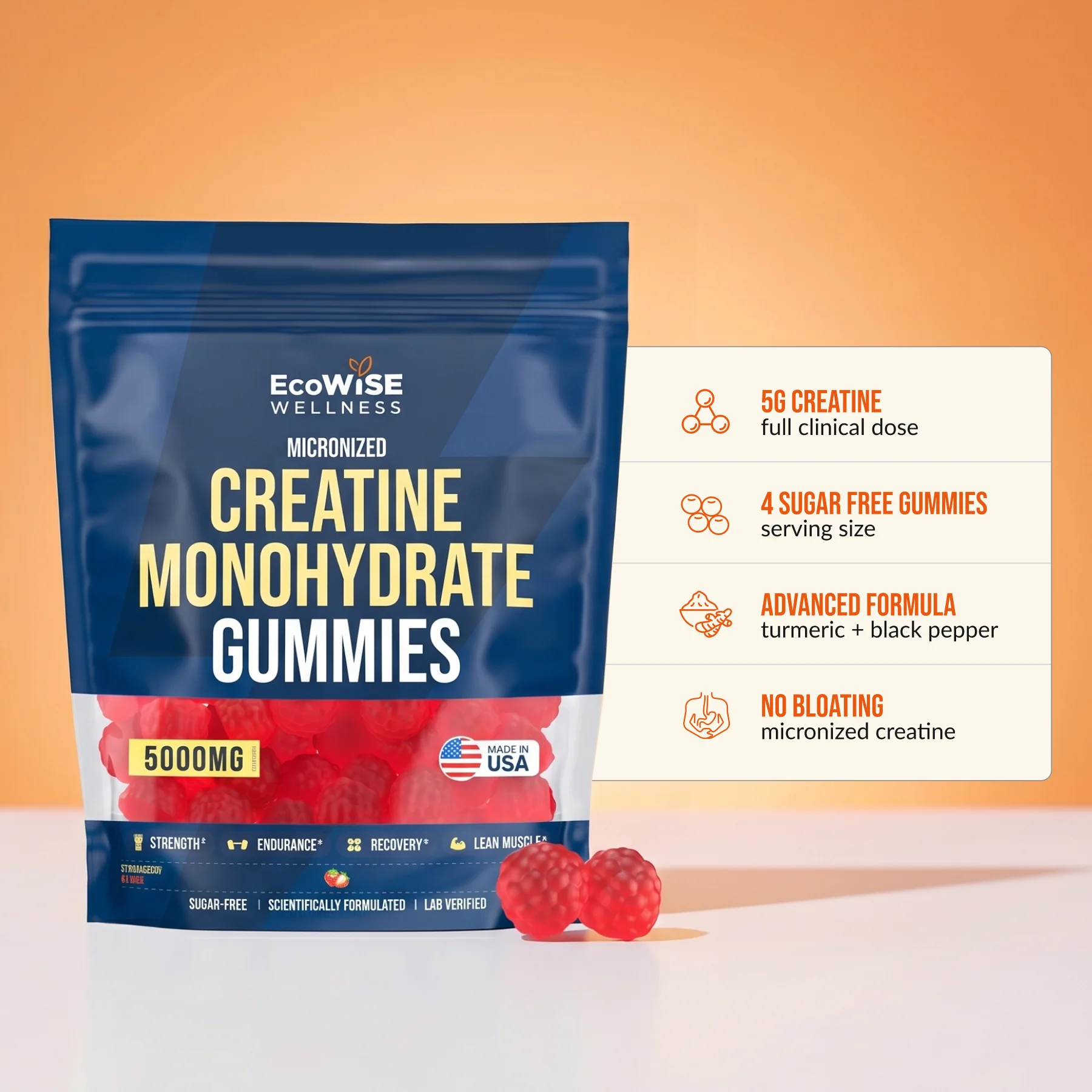
EcoWise Creatine Monohydrate Gummies provide 5 grams of creatine monohydrate in four gummies. A 120-count pack therefore supplies 30 complete servings. The brand markets the product as sugar-free and vegan and lists turmeric and black pepper in the formula, so it is not a creatine-only product.
EcoWise pages showed different one-time offers when checked, from $66 to $69 for the 120-count product, while a subscription offer showed $45 per month. That works out to roughly $2.20 to $2.30 per 5-gram one-time serving, or $1.50 at the displayed subscription price, before shipping and any tax. Because offers vary by landing page and pack, confirm the quantity, renewal terms, and final checkout total.
This is the strongest US-facing option among the TBS products reviewed if the buyer specifically wants gummies. EcoWise states that it manufactures in the United States and uses third-party testing. Buyers should still look for a report tied to the current lot rather than treating a general testing statement as batch documentation.
Cuure Creatine: a simple EU powder
Cuure lists a single-ingredient Creapure powder with a 3.4-gram daily portion and 60 days per pouch. Its official page displayed €24.90 for a one-time purchase and €22.41 on subscription. That is about €0.42 or €0.37 per labeled daily portion before delivery.
The formula is attractive for someone who wants simplicity, but the delivery information reviewed covered France and the European Union. We could not confirm standard US or UK fulfillment. American and British readers should not treat the euro price as a deliverable offer without confirming the destination directly with Cuure.
ASN Nano Creatine: clear sourcing, limited regional fit
Advanced Sports Nutrition lists a 200-gram unflavored powder using German Creapure, with 3 grams per serving and about 66 servings. The official Australian store displayed A$69.95, or roughly A$1.06 per labeled 3-gram serving, and showed the product as unavailable when checked.
The named ingredient source is useful. The Nano positioning is not evidence that the product produces better training outcomes than another documented monohydrate. US shipping was not confirmed, so currency conversion, freight, import conditions, and availability all matter before the headline price becomes meaningful.
Safety and side effects: what buyers should know
Creatine commonly increases body mass because it increases water associated with muscle creatine storage. That is not the same as fat gain. Some users also report digestive discomfort, particularly with large single doses. Splitting intake or choosing a steady daily approach may be easier than a loading protocol, but personal tolerance varies.
Creatinine on a blood test can rise after creatine use because creatinine is a breakdown product. Recent meta-analyses found a small increase in serum creatinine without a significant reduction in measured or estimated filtration outcomes in the included studies. That distinction matters, but it is not permission to self-diagnose kidney function from an article. Tell the clinician interpreting your lab work that you use creatine.
People with kidney disease, another medically managed condition, pregnancy, breastfeeding, or relevant medication use should discuss suitability with a qualified professional. Athletes in tested sport should also look for the exact third-party sport certification their governing body accepts; a general purity statement is not the same thing.
How to choose in five checks
- Form: Prefer creatine monohydrate unless you have a specific, evidence-based reason to choose another form.
- Full serving: Look for 3 to 5 grams, then count how many gummies or scoops produce that amount.
- Cost: Divide delivered price by complete servings. Include subscription renewal pricing.
- Other ingredients: Review sweeteners, allergens, botanicals, and calories rather than relying on front-label language.
- Verification: Favor current batch documentation and relevant sport certification where required.
Our verdict: powder for most, gummies for consistency
Choose powder when you want a lean formula, flexible dosing, and better value per gram. Choose gummies when their portability and pre-measured serving materially increase the odds that you will take creatine consistently. Do not pay a large premium for the assumption that a gummy is absorbed better.
Within the current TBS catalog, EcoWise is the practical US gummy choice because it delivers a stated 5-gram serving and sells through a US storefront. Cuure has the cleanest-looking powder proposition of the three but is primarily an EU purchase, while ASN is an Australian option that was unavailable when checked. Geography changes the shortlist as much as format does.
When neither format is a smart purchase
Do not buy creatine merely because a bundle timer is expiring. A product is a poor fit when its complete dose is hidden, its subscription is difficult to understand, or its claims depend on dismissing ordinary monohydrate as obsolete. It is also reasonable to wait if your training is inconsistent and you have not yet covered food, sleep, hydration, and a workable exercise plan.
Someone who already receives creatine in a pre-workout or recovery blend should calculate the combined amount before adding another product. A person facing unexplained symptoms, abnormal kidney markers, or a new medication decision needs individualized advice rather than a format comparison. Convenience can improve adherence, but it does not override suitability.
Frequently asked buying questions
Are creatine gummies as effective as powder?
They can supply the same active compound. What matters is whether the full gummy serving delivers a comparable amount of creatine monohydrate and whether you take it consistently. A gummy format has not been shown to create a special performance advantage over an equivalent monohydrate dose in powder. Compare the Supplement Facts panel, not the delivery format alone.
Do creatine gummies work faster?
There is no good reason to assume a gummy works faster simply because it is chewable. Muscle creatine stores rise with repeated intake. A loading protocol can increase stores faster than a steady maintenance dose, but loading is a dosing choice, not a gummy benefit. Claims such as instant, five-times absorption, or immediate pump need evidence specific to the finished product.
Are sugar-free gummies calorie-free?
Not necessarily. Sugar-free describes the sugar content under labeling rules; it does not guarantee zero carbohydrate or zero calories. Gelling agents, fibers, sugar alcohols, flavors, oils, or other ingredients may still appear. Check the nutrition panel for the exact flavor because a product family can change ingredients between variants.
Should creatine be taken before or after training?
Consistency and total daily intake are more useful purchasing considerations than a narrow timing window. Research has not established one universally superior time for every user. Pick a time that is easy to repeat. If a product also contains caffeine or other pre-workout ingredients, those additions can change the timing decision, which is another reason to prefer a transparent label.
How do I calculate cost per 5 grams?
Find total grams of creatine in the container, divide by five, then divide the delivered price by that result. For gummies, multiply creatine per gummy by the count before calculating. If a product uses a 3-gram labeled serving, do not compare its per-serving price directly with a 5-gram gummy serving. Normalize both to the same amount or compare each at the dose you plan to use.
Does Creapure make a powder automatically better?
Creapure names a specific German creatine monohydrate source and gives buyers useful supply-chain information. It does not mean every other monohydrate is ineffective, and it does not replace finished-batch testing. Treat it as one quality signal alongside identity, purity, sport certification, price, and availability.
Scientific references
- NIH Office of Dietary Supplements: Exercise and Athletic Performance Supplements
- Common questions and misconceptions about creatine supplementation (2021)
- ISSN position stand on creatine supplementation (2017)
- Creatine supplementation and kidney function: systematic review and meta-analysis (2025)
This buying guide is educational and does not replace medical advice. Product claims, prices, and policies were checked against official sources on September 3, 2026.

The Best Supplements' editorial guidelines guarantee transparency and reliability: all our content is written by industry specialists and validated against 7 key criteria*, so every publication delivers quality information, promo codes, and reviews.
To support The Best Supplements, links on this site are affiliate links: we may earn a commission when you buy through these links, at no extra cost to you. By using the site you accept our terms of use and our editorial policy.