



Best Matcha Powder for Lattes: 4 Picks Compared
The best matcha powder for lattes is not always the priciest tea. We compare four Japanese matcha powders for hot and iced lattes, including flavor fit, format, current US price, shipping, and return terms.

The Best Supplements is a media outlet specializing in dietary supplements: we help consumers choose reliable brands through detailed reviews, rankings, and buying guides. After analyzing more than 100 supplement brands, our team updates this ranking every month to reflect how the market evolves. Our methodology is built on 7 key criteria*, designed to compare the quality, transparency, and real value of each brand.
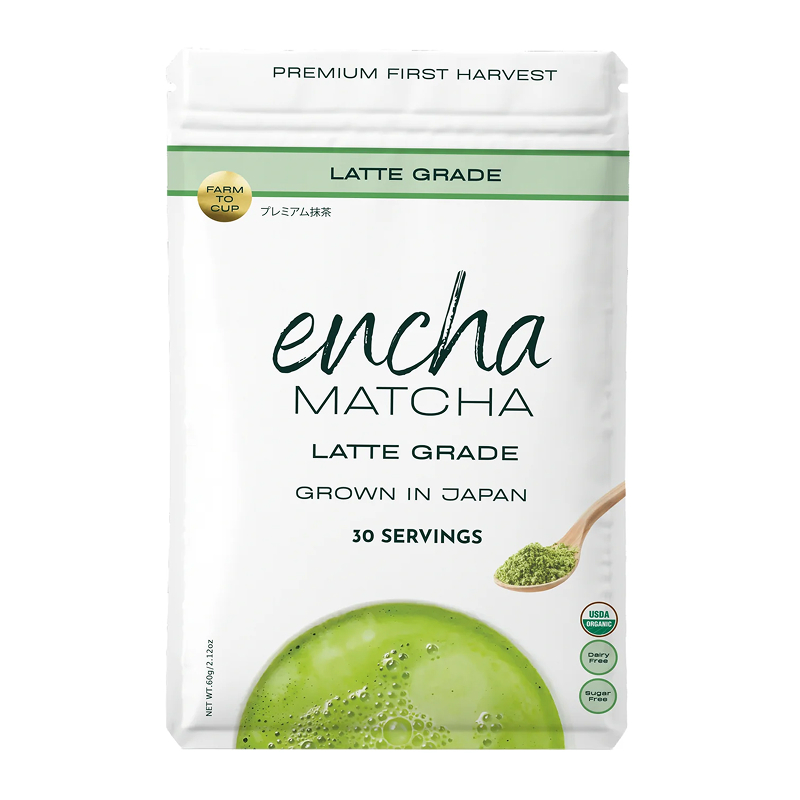

Latte Grade Matcha Powder - Encha Matcha


Encha Ceremonial Grade Latte Matcha Powder: key facts in brief
Encha Ceremonial Grade Latte Matcha Powder is a USDA Organic first-harvest blend made specifically for milk. It combines five cultivars from direct Japanese farm partnerships across Kagoshima, Miyazaki, Shizuoka, and Uji. The 30 g pouch provides 15 two-gram lattes. Whisk one teaspoon with 5 ounces of water at 160°F, then add hot or iced milk. It contains only matcha, with no dairy or added sugar. Review pregnancy, caffeine sensitivity, sleep, arrhythmia, reflux, low iron, warfarin use, and medication timing.
- USDA Certified Organic.
- First-harvest blend tailored for milk.
- Five-cultivar Japanese sourcing.
- Clear two-gram serving and multiple sizes.
- Third-party purity testing is described.
- Exact caffeine amount is not published on the product page itself, only in the site FAQ.
- Five cultivars and individual farms are not named.
- No returns or exchanges are accepted, opened or unopened, with only a 7-day defect window.
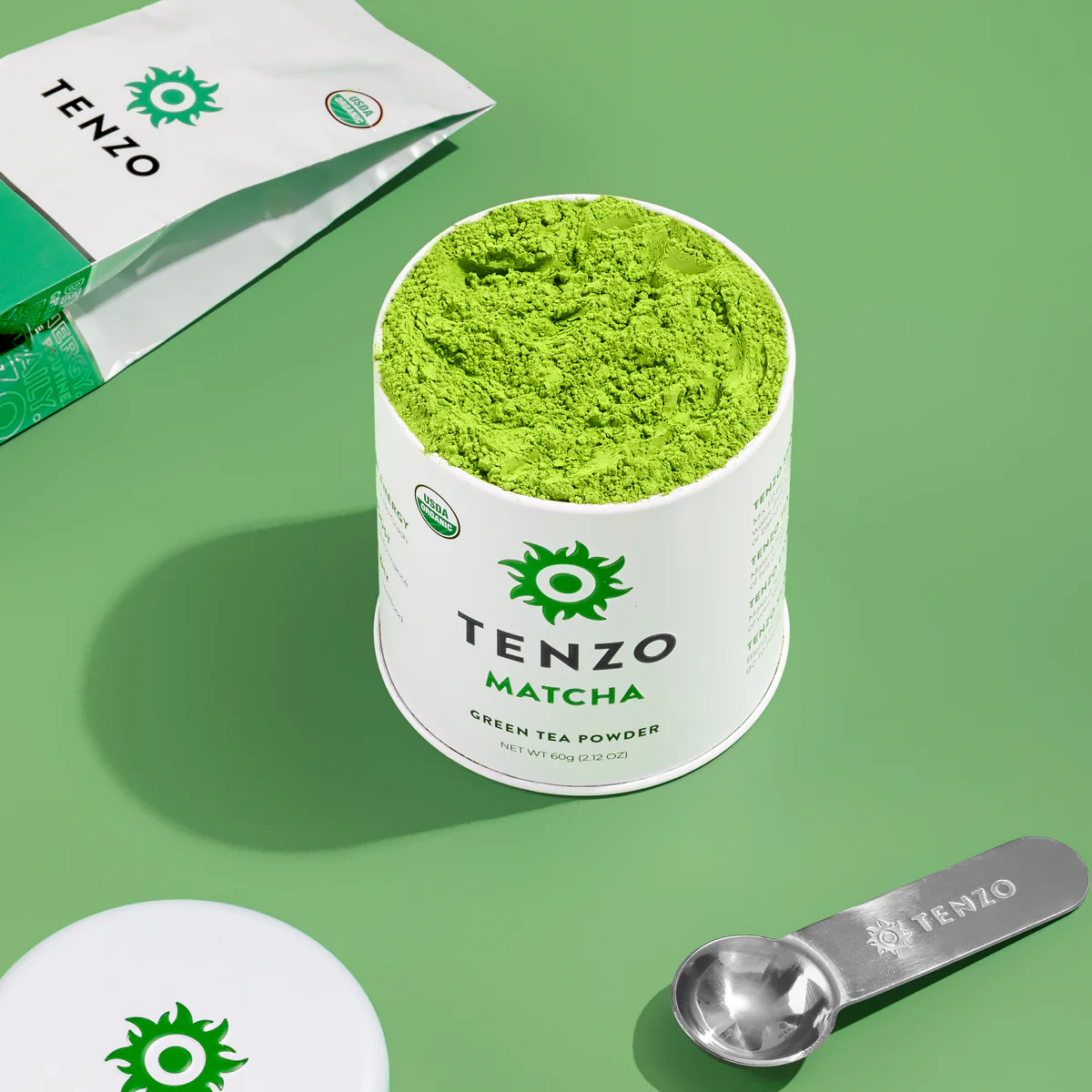

Organic Matcha - Tenzo Tea Matcha
Organic Matcha: key facts in brief
Tenzo Tea Organic Matcha is a USDA Certified Organic Japanese powder from Kagoshima. The current bundle contains two 30 g refill bags, a reusable tin, and a scoop. Tenzo uses a seasonal first- and second-flush tencha blend led by Yabukita and reports about 30 to 35 mg caffeine per current serving. Mix roughly one teaspoon with 2 ounces of water, then add about 6 ounces of water or milk. The direct price is currently $50 one time or approximately $40 by subscription. Review caffeine sensitivity, pregnancy, sleep, arrhythmia, low iron, warfarin use, and medication timing.
- USDA Certified Organic matcha.
- Named Kagoshima origin and Yabukita-led blend.
- 60 g refill bundle with reusable tin and scoop.
- Suitable for straight tea or lattes.
- Direct sourcing and quality testing are described.
- Not a single-cultivar or single-farm matcha.
- Exact harvest and grinding dates are not shown for every order.
- Subscription pricing requires attention to renewal terms.
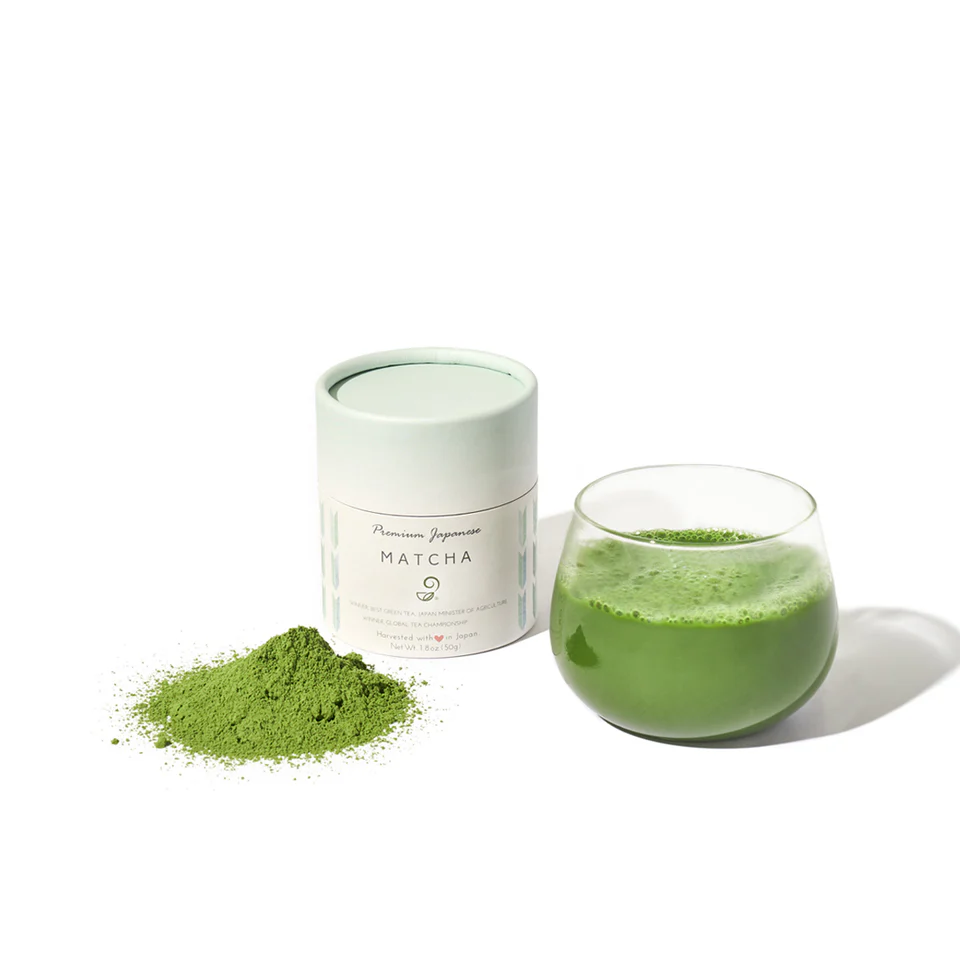

Matcha - Japanese Green Tea Co
Japanese Green Tea Co Matcha: key facts in brief
Japanese Green Tea Co Matcha is a 50 g powder made from Yabukita tea at Arahataen in Makinohara, Shizuoka. The farm uses the Chagusaba method and sugarcane-enriched soil practices. The pack provides roughly 30 to 40 cups, with about 40 mg caffeine in a typical serving according to the brand. Start with 1 to 2 g, sift, and whisk with water around 160 to 175°F. The direct price is $39 with US fulfillment from Washington State, and a refill is available only in the US. Review pregnancy, caffeine sensitivity, sleep, arrhythmia, low iron, warfarin use, and medication timing.
- Named Arahataen farm and Shizuoka origin.
- Yabukita cultivar with Chagusaba farming.
- 50 g package with 30–40 cups.
- 2018 competition recognition.
- US warehouse and refill option.
- Exact harvest and milling dates are not public for every lot.
- Batch compound and contaminant reports are not shown directly.
- Serving count varies with preparation strength.
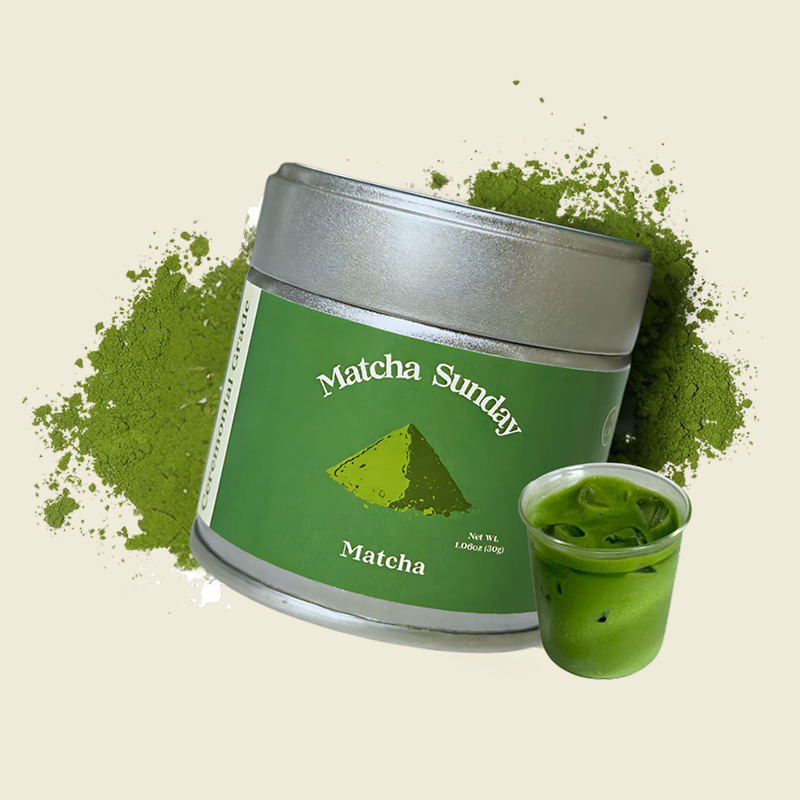

Ceremonial Grade Matcha Powder - Matcha Sunday
Ceremonial Grade Matcha Powder 50g: key facts in brief
Matcha Sunday Ceremonial Grade Matcha Powder 50g is a single-ingredient Japanese matcha from Shizuoka. The 50 g bag provides about 50 one-gram cups, with approximately 40 mg caffeine per listed serving and no added sugar. Sift, whisk with non-boiling water, then add water or milk. The direct US price is $39.99 one time, with subscription plans from $29.99 a month. Review caffeine sensitivity, pregnancy, sleep, arrhythmia, low iron, warfarin use, and medication timing. The farm is named as a family-owned Shizuoka farm, but the cultivar, harvest and lot testing are not published.
- 50 g value-oriented bag.
- About 50 one-gram servings.
- 100% matcha from Shizuoka.
- No added sugar.
- Approximately 40 mg caffeine per listed cup.
- No cultivar, harvest date or lot-specific test report published for this grade.
- Bag requires careful storage to preserve freshness.
- Final sale: consumables cannot be returned or exchanged once shipped.
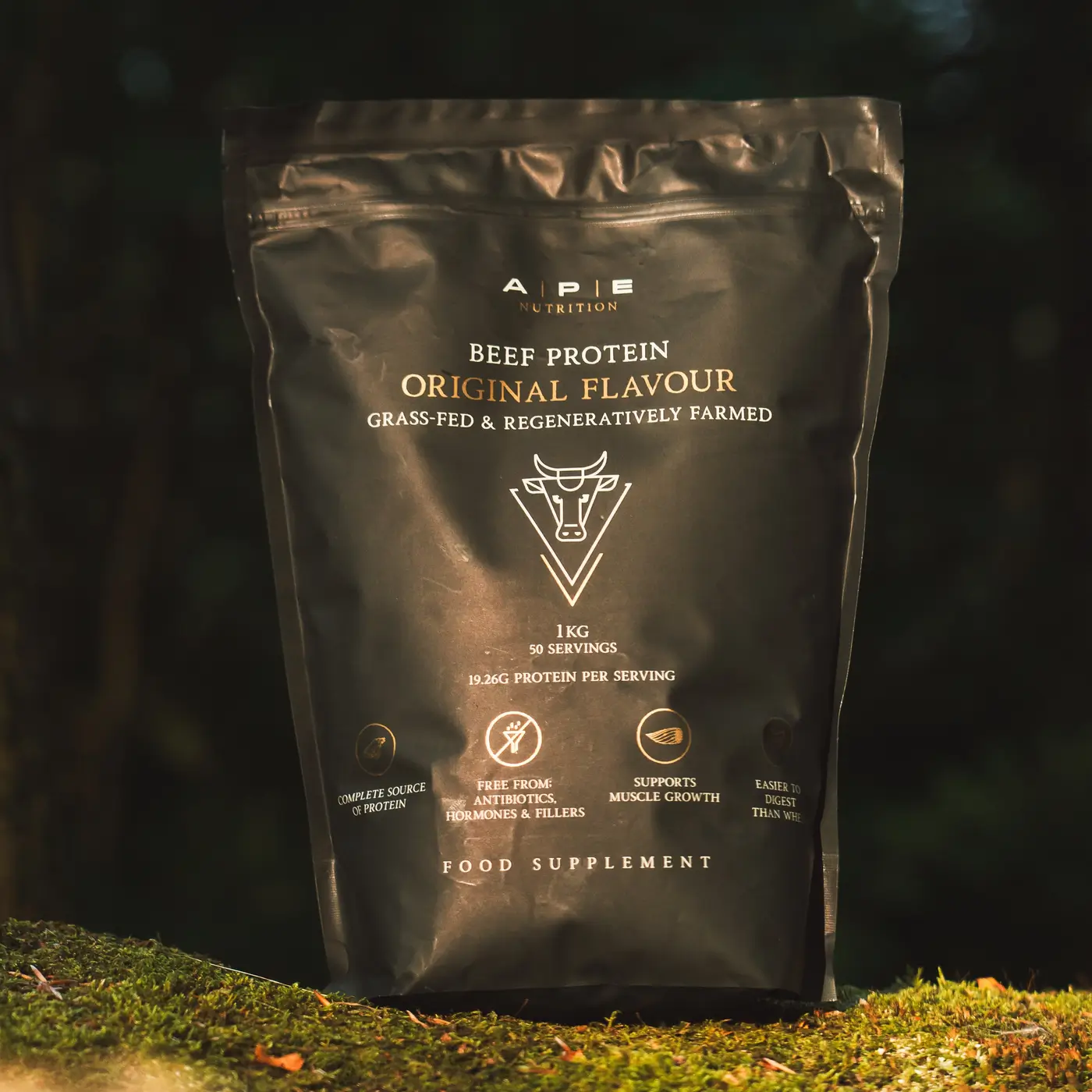

Grass-Fed Beef Protein
Grass-Fed Beef Protein: key facts in brief
Grass-Fed Beef Protein in Original Flavour is APE Nutrition's unflavoured beef protein powder, a 1 kg bag holding 50 servings of 20 g. Each serving carries 19.07 g of protein and all nine essential amino acids, from one ingredient, with no dairy, soy or filler declared. The beef comes from grass fed regenerative farms and the powder is third party tested for pesticides and heavy metals. The bag is $74.24, falling to $66.83 with the code LEMEILLEURCOMPLEMENT, or $1.34 a serving. APE sells direct from the United Kingdom, so a US order ships tracked in 5 to 9 days.
- Provides 19.07 g of protein per 20 g serving.
- Single ingredient, free from dairy, soy and sweeteners.
- Fifty servings per bag at $1.34 with the code.
- Third party tested for pesticides and heavy metals.
- Sourced from grass fed regenerative cattle.
- Mild savoury beef taste that many buyers mask in a shake.
- Extraction method and amino acid figures are not published.
- Costs more than US whey once UK shipping is added.
Grass-Fed Beef Protein
Grass-Fed Beef Protein: key facts in brief
Grass-Fed Beef Protein in Original Flavour is APE Nutrition's unflavoured beef protein powder, a 1 kg bag holding 50 servings of 20 g. Each serving carries 19.07 g of protein and all nine essential amino acids, from one ingredient, with no dairy, soy or filler declared. The beef comes from grass fed regenerative farms and the powder is third party tested for pesticides and heavy metals. The bag is $74.24, falling to $66.83 with the code LEMEILLEURCOMPLEMENT, or $1.34 a serving. APE sells direct from the United Kingdom, so a US order ships tracked in 5 to 9 days.
- Provides 19.07 g of protein per 20 g serving.
- Single ingredient, free from dairy, soy and sweeteners.
- Fifty servings per bag at $1.34 with the code.
- Third party tested for pesticides and heavy metals.
- Sourced from grass fed regenerative cattle.
- Mild savoury beef taste that many buyers mask in a shake.
- Extraction method and amino acid figures are not published.
- Costs more than US whey once UK shipping is added.
Grass-Fed Beef Protein
Grass-Fed Beef Protein: key facts in brief
Grass-Fed Beef Protein in Original Flavour is APE Nutrition's unflavoured beef protein powder, a 1 kg bag holding 50 servings of 20 g. Each serving carries 19.07 g of protein and all nine essential amino acids, from one ingredient, with no dairy, soy or filler declared. The beef comes from grass fed regenerative farms and the powder is third party tested for pesticides and heavy metals. The bag is $74.24, falling to $66.83 with the code LEMEILLEURCOMPLEMENT, or $1.34 a serving. APE sells direct from the United Kingdom, so a US order ships tracked in 5 to 9 days.
- Provides 19.07 g of protein per 20 g serving.
- Single ingredient, free from dairy, soy and sweeteners.
- Fifty servings per bag at $1.34 with the code.
- Third party tested for pesticides and heavy metals.
- Sourced from grass fed regenerative cattle.
- Mild savoury beef taste that many buyers mask in a shake.
- Extraction method and amino acid figures are not published.
- Costs more than US whey once UK shipping is added.
Grass-Fed Beef Protein
Grass-Fed Beef Protein: key facts in brief
Grass-Fed Beef Protein in Original Flavour is APE Nutrition's unflavoured beef protein powder, a 1 kg bag holding 50 servings of 20 g. Each serving carries 19.07 g of protein and all nine essential amino acids, from one ingredient, with no dairy, soy or filler declared. The beef comes from grass fed regenerative farms and the powder is third party tested for pesticides and heavy metals. The bag is $74.24, falling to $66.83 with the code LEMEILLEURCOMPLEMENT, or $1.34 a serving. APE sells direct from the United Kingdom, so a US order ships tracked in 5 to 9 days.
- Provides 19.07 g of protein per 20 g serving.
- Single ingredient, free from dairy, soy and sweeteners.
- Fifty servings per bag at $1.34 with the code.
- Third party tested for pesticides and heavy metals.
- Sourced from grass fed regenerative cattle.
- Mild savoury beef taste that many buyers mask in a shake.
- Extraction method and amino acid figures are not published.
- Costs more than US whey once UK shipping is added.
We look at each brand's composition, dosages, active ingredients, and transparency.
We compare the real price based on dosage, quantity, and how long each product lasts.
We analyze customer feedback and overall satisfaction.
Exclusive discounts when a brand offers a partner deal.
The best matcha powder for lattes: our four picks for milk-based drinks
The best matcha powder for lattes is not necessarily the most expensive ceremonial tea. Milk softens delicate aromas, so a latte needs enough body to remain recognizable without turning harsh. We prioritized powders with clear Japanese sourcing, a practical US buying route, and a flavor profile that makes sense with dairy or plant milk.
- Best latte-focused option: Encha Ceremonial Grade Latte Matcha Powder.
- Best subscription bundle: Tenzo Organic Matcha.
- Best traditional single-origin-style pick: Japanese Green Tea Co. Ceremonial Matcha.
- Best for shoppers who also drink matcha straight: Matcha Sunday Ceremonial Grade Matcha.
These placements reflect fit for the search intent, not a laboratory test or a claim that one powder is best for every palate. Prices and promotions below were checked on official US-facing pages and can change.
How we compared matcha for lattes
We looked first at the way each brand describes its harvest, grade, origin, ingredients, and intended preparation. A product earned extra relevance when the official page specifically positioned it for milk. We also checked current format, posted price, shipping information, subscription terms, and return restrictions.
We did not rank powders by customer star rating, color in a marketing photo, or unsupported health promises. Matcha is powdered green tea, so caffeine exposure still matters. Taste also depends heavily on dose, water temperature, milk choice, sweetener, and freshness after opening.
1. Encha Ceremonial Grade Latte Matcha Powder
Why it leads this latte comparison: Encha built this specific grade around milk. The official description emphasizes a first-harvest, shade-grown powder with a fuller body, light astringency, creamy umami, and very low bitterness. That is a more direct match for a hot or iced latte than a fragile tea designed mainly for water.
On TBS: Latte Grade Matcha Powder product page, our full Encha Matcha review, Encha Matcha promo code.
The current 30 g option starts at $18.99 and is listed as approximately 15 cups. Encha instructs users to whisk one teaspoon into 5 ounces of water at 160°F, then add milk. The brand describes all of its unflavored matcha grades as pure organic matcha grown in Japan. The latte product page currently identifies Uji and positions the powder as USDA Organic.
The tradeoff is simple: this is a purpose-built latte choice, not the lowest-cost bulk culinary matcha. Anyone making sweet, strongly flavored café drinks may prefer Encha's less expensive barista grade. Also, the TBS product record does not currently contain a direct affiliate URL for this SKU, so readers should confirm the current product page rather than assume a promotional link is available.
Best for: US shoppers who make milk-forward matcha several times a week and want a formula explicitly tuned for that use.
2. Tenzo Organic Matcha
Tenzo takes a bundle-first approach. Its current offer includes two 30 g bags, a refillable tin, and a scoop. The official store lists $50 for a one-time 60 g bundle or $40 on the monthly subscription. That works out to roughly $0.83 or $0.66 per one-gram serving using the brand's stated cup count.
On TBS: Organic Matcha product page, our full Tenzo Tea Matcha review, Tenzo Tea Matcha promo code.
The powder is described as organic ceremonial matcha sourced from Japanese farms, with a smooth and light profile. It is versatile enough for water, but the 60 g format and subscription controls make it particularly practical for a regular latte routine. Tenzo says subscriptions ship free and can be changed, paused, or canceled.
Tenzo also publishes a 60-day first-order money-back guarantee. The policy says the refund excludes shipping and handling, and the request must be submitted within 60 days of delivery. That is more flexible than the final-sale language common for opened foods, but shoppers should still read the current terms before subscribing.
Best for: frequent matcha drinkers who want a larger recurring supply and simple cost-per-cup math.
3. Japanese Green Tea Co. Ceremonial Matcha
This pick puts the tea itself at the center. Japanese Green Tea Co. currently lists a 50 g ceremonial matcha at $39. The product is grown and made in Shizuoka, Japan, from the Yabukita cultivar. The official page identifies a Chagusaba-inspired cultivation method using compostable grasses and sugarcane to support the soil, and it lists green tea as the only ingredient.
On TBS: Matcha product page, our full Japanese Green Tea Co review, Japanese Green Tea Co promo code.
The company estimates 30 to 40 cups from the 50 g full-size format. Its nutrition panel uses a larger seven-gram serving for an 11-ounce preparation and lists 42 mg of caffeine at that dose, which illustrates why serving definitions must be compared carefully. A typical home latte may use much less powder.
Free shipping is currently advertised for the United States and several other countries. Refill packaging is limited to US customers. This is a good option for someone who values detailed farm and cultivar information, but its subtler ceremonial positioning may be less cost-efficient in heavily sweetened drinks.
Best for: shoppers who want a documented Japanese tea origin and plan to alternate between lattes and traditional whisked matcha.
4. Matcha Sunday Ceremonial Grade Matcha Powder
Matcha Sunday offers a 50 g bag of 100% Japanese ceremonial matcha from Shizuoka. The current one-time price is $39.99, with subscriptions offering different discounts, gifts, and shipping terms. The brand describes the powder as smooth, subtly sweet, and suitable for tea, smoothies, baking, and iced matcha lattes.
On TBS: Ceremonial Grade Matcha Powder product page, our full Matcha Sunday review, Matcha Sunday promo code.
The page states one gram contains about 40 mg of caffeine and recommends one gram for a latte. That is useful because it connects caffeine information to the suggested preparation. However, the store also displays different serving counts in different sections, so buyers should rely on bag weight and their own measured dose rather than a headline number of cups.
Matcha Sunday publishes clear food-return limits. Consumable products are final sale once shipped, although customers who are unhappy are invited to contact support. Its shipping page currently says standard shipping takes four to seven days. Product and policy pages show different free-shipping wording, so the checkout total is the final reference.
Best for: someone who wants a US-shipped ceremonial powder for both simple lattes and straight matcha, and who is comfortable with final-sale food terms.
What makes a good matcha latte powder?
Enough flavor to stand up to milk
Milk reduces perceived bitterness but can also mute umami and aroma. A latte-focused matcha should have a rounded body and enough green-tea character to remain present. Ceremonial is not an absolute quality guarantee, and culinary does not automatically mean inferior. The intended drink matters more than the label alone.
Japanese origin and a short ingredient list
For an unsweetened matcha powder, the ingredient list should normally be just matcha green tea. Flavored latte blends can be convenient, but sugar, milk powder, collagen, mushrooms, and flavorings turn them into a different category. We kept this comparison focused on pure matcha.
A price based on grams, not the container
Compare total grams and your actual dose. A 30 g pouch used at two grams per latte provides 15 drinks. The same pouch used at one gram provides 30. Subscription savings only help if the delivery schedule matches consumption and the product stays fresh.
Policies that fit a food purchase
Opened tea is often nonreturnable for food-safety reasons. Review the first-order guarantee, shipping threshold, renewal schedule, and cancellation process before buying multiple bags.
How to make a smoother matcha latte
- Sift one to two grams of matcha into a wide bowl or cup.
- Add two to five ounces of water below boiling, generally around 160°F to 175°F.
- Whisk until the powder is dispersed and a light foam forms.
- Add hot or cold milk, then sweeten only if desired.
Too much boiling water can flatten the flavor and intensify bitterness. A small sifter prevents dry clumps. If the latte tastes weak, increase matcha gradually instead of adding more sweetener. Keep opened powder airtight, cool, dry, and protected from light.
Milk choice changes the result
Whole dairy milk creates a round, rich cup and can soften a more assertive powder. Oat milk is naturally sweet and produces a café-style texture, but its flavor may cover delicate matcha. Unsweetened almond milk is lighter and can reveal bitterness more clearly. Soy milk sits between those options and usually foams well.
There is no universally best pairing. Start with an unsweetened milk so you can judge the tea, then adjust. A matcha that feels too light in oat milk may work well with almond milk or with a slightly larger dose. A powder that tastes intense in water may become balanced once milk is added.
Freshness matters more than decorative claims
Matcha begins losing aroma after exposure to air, heat, light, and humidity. A smaller pouch can therefore be better value than a discounted bulk bag if it will take months to finish. Look for packaging that closes tightly and note whether the brand provides a harvest, packing, or best-by date.
Bright green color can be a useful freshness clue, but photography and screen settings make online color comparisons unreliable. The same applies to terms such as premium, ceremonial, or café grade, which are not a single US legal grading standard. Origin, ingredients, harvest details, storage, and taste in your chosen preparation are more informative.
Caffeine, safety, and realistic expectations
Matcha contains caffeine. The amount varies with cultivar, harvest, processing, and serving size. People who are pregnant, sensitive to caffeine, taking interacting medication, or managing a medical condition should ask a qualified professional about an appropriate intake. Matcha can be part of a balanced routine, but it does not guarantee calm energy, weight loss, detoxification, or improved cognition.
Final verdict
Encha is our first pick for the specific job of making lattes because the product is formulated and described around milk. Tenzo is the more convenient subscription bundle, Japanese Green Tea Co. offers the strongest farm-and-cultivar detail, and Matcha Sunday is a flexible ceremonial option with clear preparation guidance.
If you mostly drink matcha with water, start with the two ceremonial-focused choices. If milk is always part of the cup, begin with Encha or compare Tenzo's 60 g bundle cost. In every case, check the live official store for inventory, shipping, and the final price before ordering.
Sources checked
Frequently asked questions❓
The 6 questions consumers ask most:
Encha Ceremonial Grade Latte Matcha is our first pick because its flavor profile and preparation are specifically designed to hold up in milk.
No. Ceremonial matcha can make a smooth latte, but a latte or culinary grade may offer more body and better value when milk and sweetener are added.
Start with one to two grams per drink, then adjust for cup size, milk, and taste. Follow the current product directions when they differ.
Yes. The amount varies by tea and dose. People who are caffeine-sensitive should start small and avoid assuming matcha is stimulant-free.
Policies vary. Some brands offer a first-order guarantee, while others treat shipped consumable products as final sale. Check the live policy before ordering.
Keep it tightly sealed in a cool, dry, dark place and limit exposure to air, heat, moisture, and strong odors.
The 7 key criteria behind our reviews
Every piece of content published on The Best Supplements is carefully written by passionate experts, following a rigorous process. The Best Supplements is committed to providing information that is reliable, useful, and enjoyable to read.
Specialized, committed writers

Rigorous research behind every fact
Full transparency on sources
Focused on your real needs