



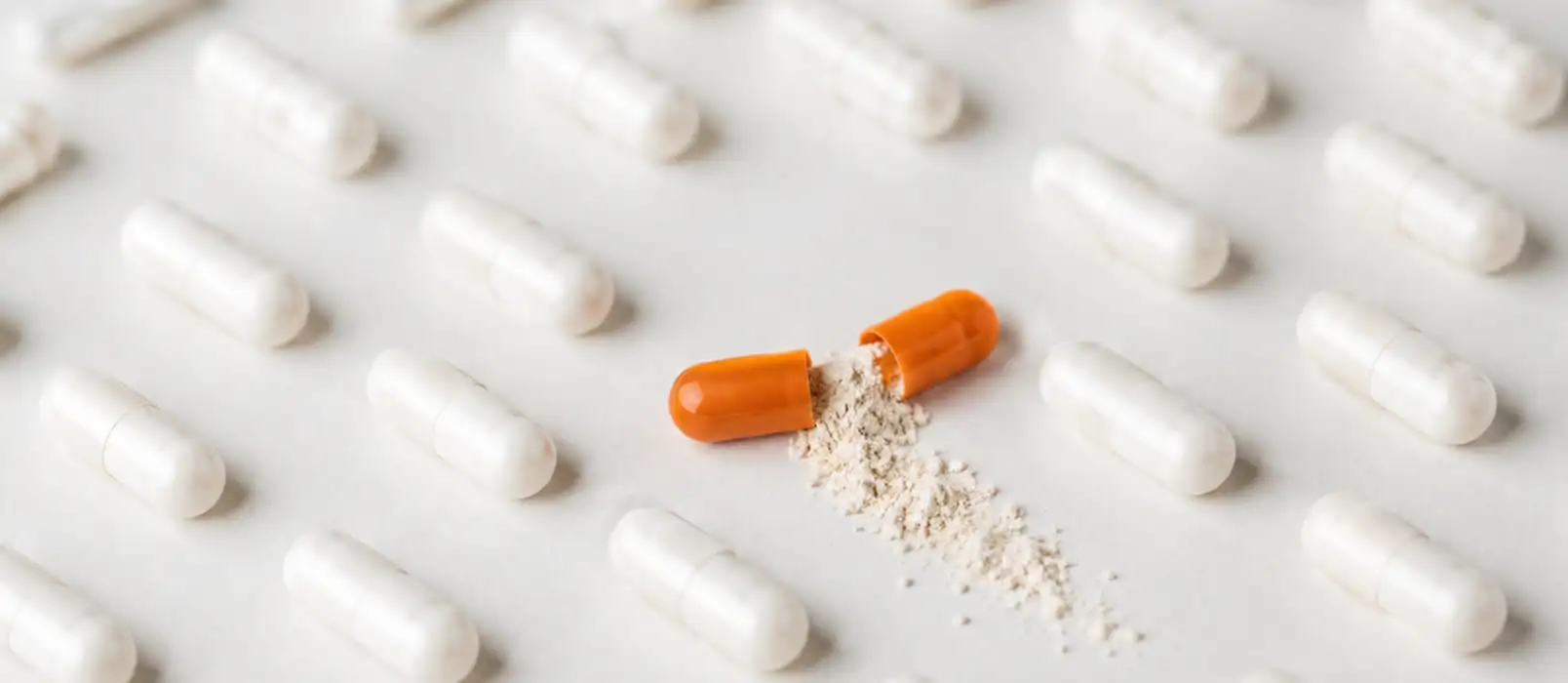
Fatigue, digestive discomfort, a weakened immune system... The list of ailments probiotics are supposed to address keeps growing. They come in every form, every color and, of course, every price range. But what exactly are probiotics? What are they for? And above all, what should we make of their often extravagant promises?
The role of the microbiome is well established. The gut and the microorganisms it hosts influence the whole body, immunity included.
Conventional probiotics run into structural limits. Colonization of the gut remains transient, and efficacy shown for one strain does not carry over to others.
EFSA has approved almost no health claims for this category. In Europe, a probiotic manufacturer is not allowed to claim its product improves digestion or strengthens immunity.
Another approach is gaining ground. Bovine colostrum, long reserved for elite sport, works on the intestinal lining itself rather than trying to recolonize the microbiome.
What are probiotics for?
Probiotics are products containing live microorganisms, most often bacteria, meant to colonize the gut and help rebalance the intestinal microbiome.
Remember that the gut is a marvel of complexity. It makes sure the nutrients from our food reach the right parts of the body, and it hosts a very large share of our immune cells. In recent years, scientists have also taken a close interest in the gut-brain axis, the connection between the gut microbiome and certain brain functions.

The microbiome is the collection of microorganisms living in our gut, a complex ecosystem comparable to a tropical forest, whose balance can be disrupted by an unbalanced diet, stress or certain treatments. Scientists then speak of dysbiosis, an imbalance that several studies have linked to fatigue, digestive discomfort and a less responsive immune system.
This is exactly where probiotics are supposed to come in: providing specific bacterial strains to try to rebalance the microbiome. Appealing on paper. But how does it hold up in practice?
Probiotic myths and realities
❌ Myth #1: all probiotics are the same.
✅ The reality: false.
Probiotic supplements vary considerably in quality, number of strains, dosage and packaging.
❌ Myth #2: probiotics are destroyed by stomach acid before they reach the gut.
✅ The reality: partly false.
Some strains, including certain bifidobacteria and lactobacilli, can partly survive gastric transit. But surviving the stomach in no way guarantees lasting implantation in the gut, which brings us to the most important limit of this product family, detailed further down.
❌ Myth #3: probiotics barely provide more bacteria than a traditional diet.
✅ The reality: false.
Some fermented foods such as yogurt or sauerkraut contain lactobacilli, but in limited quantities and diversity. A quality probiotic can deliver more bacteria in a single serving than several pounds of fermented food.
❌ Myth #4: the importance of the gut microbiome is overstated.
✅ The reality: false.
Many studies have highlighted links between the gut microbiome and overall health, particularly when it comes to immunity and digestive comfort.
❌ Myth #5: the effects of a probiotic are immediate.
✅ The reality: rarely.
Probiotics are meant to work over the long run, generally over several weeks, when they work at all.
Why do conventional probiotics show their limits?

This is where things get complicated, and it is a point few articles on the subject address honestly.
Gut colonization remains transient
Each person's microbiome is already firmly established and personalized, shaped from birth. Several studies have shown that the strains delivered by a probiotic rarely settle in durably once supplementation stops, which partly explains why perceived effects often fade shortly after stopping.
Efficacy depends on the strain, not the category
An effect demonstrated for one specific strain, in one specific study, on one specific population does not generalize to other strains or other probiotics on the market, even those sold under the generic label of "probiotic".
EFSA approves almost no health claims
To date, the European Food Safety Authority has approved almost no health claims for probiotics as a category, apart from a very narrow claim about yogurt cultures and lactose digestion. In Europe, the vast majority of manufacturers therefore have no legal right to state that their product improves digestion, strengthens immunity or rebalances the microbiome.
That is what explains the very vague wording found on probiotic boxes, never backed by an approved health claim. This does not mean probiotics are useless. But it calls for caution about some manufacturers' promises, and it explains researchers' growing interest in other approaches to gut health.

A different approach, long reserved for elite sport
It is in this context that another ingredient has gradually drawn the attention of researchers: bovine colostrum, the first milk produced by a cow in the hours after calving, naturally rich in immunoglobulins, lactoferrin and growth factors.
It is this different mechanism, combined with a growing body of research, that explains the rising interest in colostrum.
What makes a quality gut health solution?
With these findings in mind, we drew up a list of criteria to evaluate the most widespread options on the market, conventional probiotics and bovine colostrum alike.
Is the mechanism of action lasting or transient?
Is the product backed by published scientific evidence, independent of marketing claims?
What does the product actually act on: gut flora, the intestinal lining, or both?
Are the ingredient's origin and traceability verifiable?
Does the packaging guarantee the product's stability and quality over time?
Based on these criteria, we compared bovine colostrum from the French brand Primal with three of the most widely distributed probiotics: Digest Delight by Kosbiotic, Daily Synbiotic DS-01 by Seed and Synbiotic dual cap by Epetōme. Scores follow our public rating grid, identical for every brand.
Our ranking: 4 gut health solutions
Frequently asked questions
Probiotics deliver live microorganisms, most often bacteria, meant to help rebalance the gut microbiome. In practice, their effect depends on the strain used: a result shown for one specific strain does not carry over to other products sold under the same name.
It depends entirely on the strain and the use case. To date, EFSA has approved almost no health claims for probiotics as a category, apart from a very narrow claim about yogurt cultures and lactose digestion.
Rarely right away. Studies generally assess effects over several weeks of regular use. Feeling something within the first few days is more often normal digestive variability than an effect of the product itself.
Research has not established any time of day as superior. Consistency matters most. Follow the manufacturer's directions, which account for the product's format and type of encapsulation.
They are two different approaches. A probiotic delivers live bacteria that must establish themselves in an already settled microbiome. Bovine colostrum delivers no bacteria: it provides bioactive compounds such as immunoglobulins and lactoferrin, without relying on colonization.
They are generally well tolerated. Temporary bloating or gas is sometimes reported at the start of a course. If you are immunocompromised, have a chronic condition, or are on medication, ask a healthcare professional before starting.
That is a question for your doctor or pharmacist. Recommendations vary by antibiotic and individual situation, and this article is not a substitute for medical advice.

The Best Supplements' editorial guidelines guarantee transparency and reliability: all our content is written by industry specialists and validated against 7 key criteria*, so every publication delivers quality information, promo codes, and reviews.
To support The Best Supplements, links on this site are affiliate links: we may earn a commission when you buy through these links, at no extra cost to you. By using the site you accept our terms of use and our editorial policy.