



Diolata Review: Is This Organic Ube Powder Worth €39.99 a Jar?
Diolata is a French brand built around one ingredient: organic purple yam powder from the Philippines, for lattes, smoothies and baking. Its file is unusually complete for a culinary powder, with EU and USDA organic certification, an ISO 22000 site and a published contaminant analysis. Here is our detailed analysis of the composition, the real euro prices, the supply chain and the shipping limits.






Our verdict on Diolata in brief
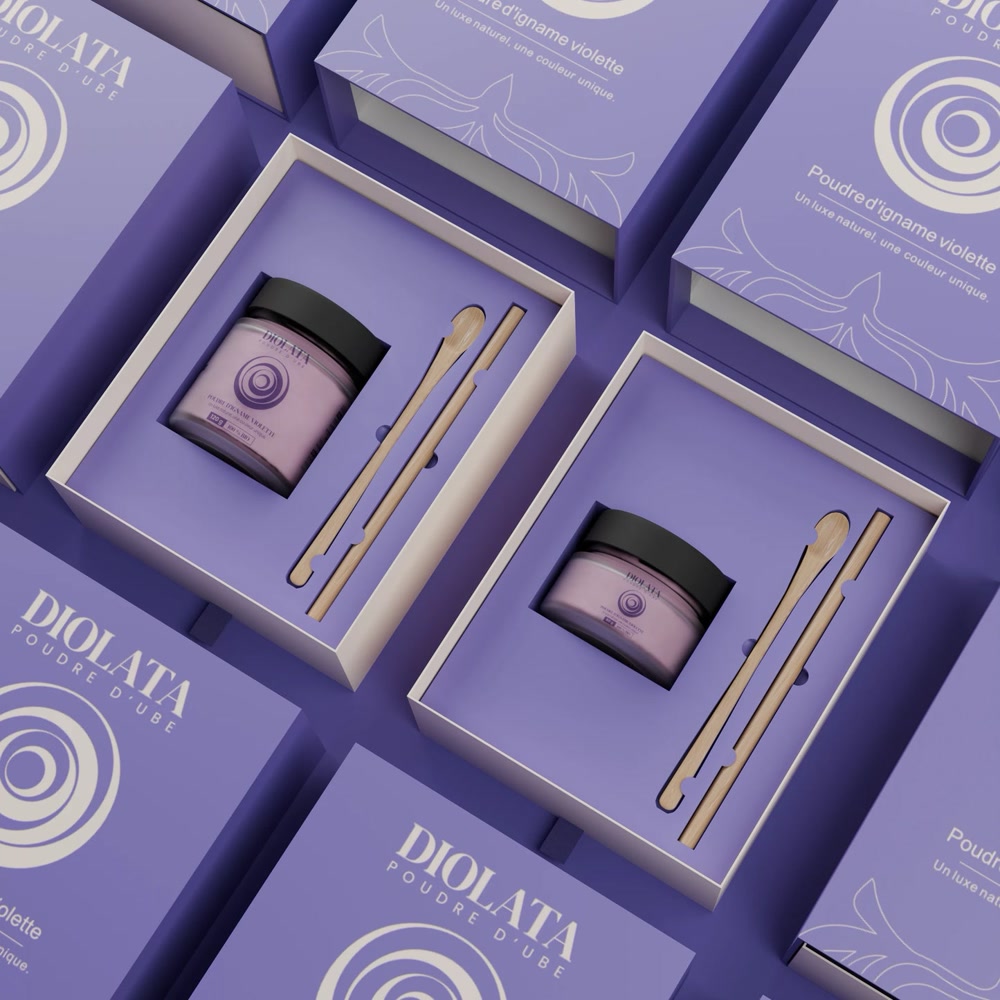
Diolata does one thing and documents it properly. The ingredient list of its flagship powder is a single line, purple yam, with no caffeine, no added sugar, no colouring and no additive, the purple coming from the root's own anthocyanins. The powder carries both EU organic and USDA Organic certification, the production site is described as ISO 22000, the rhizomes are traced to the Philippines, and the FAQ reports independent laboratory testing with mercury not detected and lead and cadmium well below regulatory thresholds. The 120 g jar is €39.99, marked down from €49.99, and the 80 g jar €29.99.
Three things to keep in proportion. The supply chain is Philippine ube processed in China and packaged in France, which the brand states on its vision page and which is not the same as made in France. The customer percentages on energy and concentration come from the brand's own feedback, not from a trial. And the store serves eleven European markets plus Switzerland: it does not deliver to the United States.


In this full review we go through the real composition, the certifications, the supply chain and the current euro prices of Diolata, format by format, based on the brand's official product page, FAQ and policies.
Brand scores
Product scores
User experience
Shipping and customer service
Our analysis of Diolata: the powders under the microscope
This page is an analysis of the official Diolata store, its product pages, its FAQ and its policies, not a tasting. Every price below is quoted in euros, the store's own currency, and was read on diolata.fr on the day of writing. The availability point comes first: the country selector lists France, Germany, Austria, Belgium, Spain, Italy, Luxembourg, Monaco, the Netherlands, Portugal and Switzerland, and the shipping policy serves those eleven European markets only. The United States is not served.
Second observation, and it is the one that separates this brand from most colourful powder sellers: the FAQ actually publishes what a food ingredient should publish. Independent laboratory testing is reported with mercury not detected and lead and cadmium well below regulatory thresholds, the production site is described as ISO 22000 certified, the rhizomes are traced to the Philippines, and the powder carries both EU organic and USDA Organic certification.
📌 Certified organic ube powder: the flagship jar
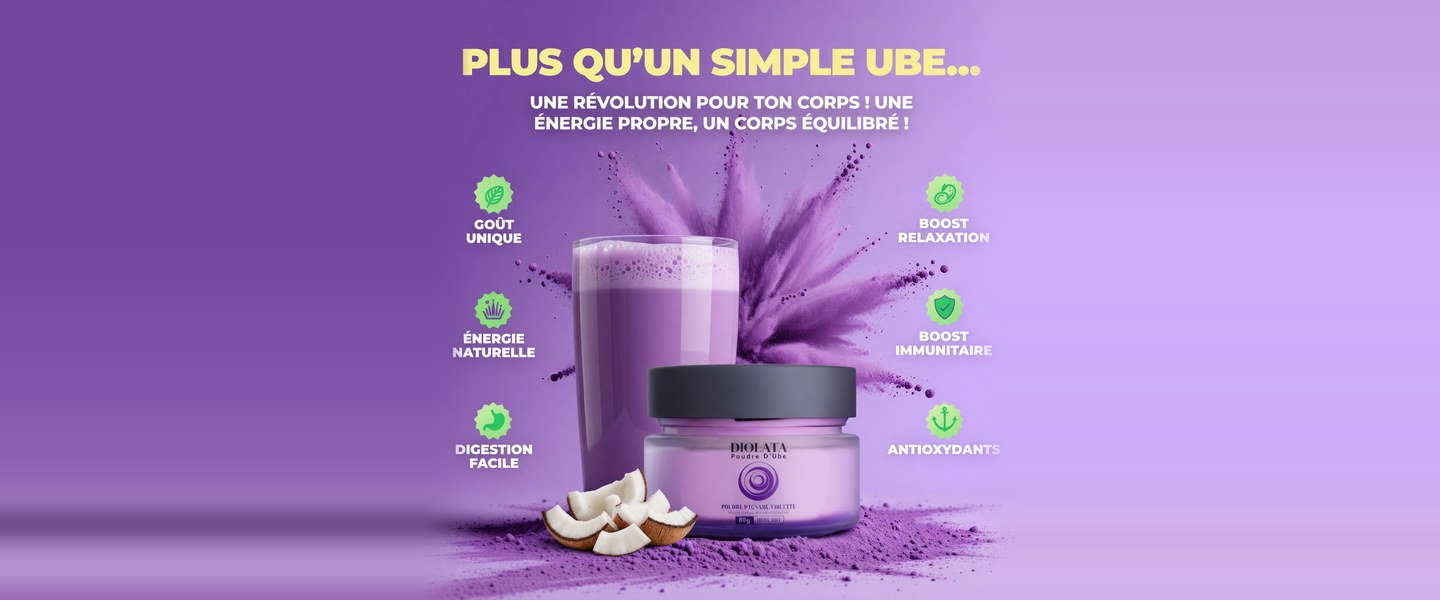
The whole brand rests on one product. The ingredient list is a single line: purple yam, nothing else. No caffeine, no added sugar, no colouring, no additive, and the purple comes from the anthocyanins in the root rather than from a dye, which is the honest version of a claim usually made loosely in this category. The powder is vegan, sold in a jar, and the brand recommends storing it dry between 15 and 25 degrees Celsius away from light to protect the pigment.
Two formats: 120 g at €39.99, marked down from €49.99, and 80 g at €29.99, down from €39.99. That is €33.33 per 100 g on the larger jar, and the page counts about 39 cups from 120 g. Both were in stock at the time of writing. On use, 1 to 2 teaspoons in about 200 ml of liquid makes a latte, and the fine texture dissolves into smoothies, creams, cakes and icings. The only real precaution is a yam allergy, and anyone on a medically supervised diet should count the carbohydrates like any other starchy ingredient.
📌 The packs and the subscription: where the price moves
Above the single jar the store sells volume. The 240 g pack is listed at €67.98 instead of €99.98 for about 118 cups, and the 360 g pack at €98.38 instead of €149.97 for about 158 cups. There is also a monthly plan at €24.99 against a €49.99 reference, without commitment, cancellable in one click.
The arithmetic is worth doing before ordering. At €39.99 for 120 g the single jar is €0.33 a gram; the 360 g pack at €98.38 brings that to €0.27. The subscription is the cheapest entry per month but creates a recurring order, so it suits someone who genuinely drinks an ube latte most days. Since this is a pigment-driven product that the brand itself tells you to keep away from light and heat, buying 360 g at once is only sensible at real consumption rates.
📌 The rest of the range: fruit powders and sachets
Around the ube sit a series of single-ingredient organic powders sold in small nomad formats: strawberry, raspberry, mango, blackberry, peach, vanilla, cocoa, pink pitaya and purple sweet potato, priced from about €0.80 to €1.79 a sachet. Two boxes of ten 20 g sachets are also listed, organic strawberry at €15.90 and organic vanilla at €17.90.
This second line is a sampling and mixing range rather than a real catalog: the units are tiny and two references, pink pitaya and peach, were out of stock at the time of writing. The useful part is that it lets you test a flavour for a euro or two before committing, and the purple sweet potato powder is worth knowing about, since it is often confused with ube and is a different root.
The verdict on format and dosing
The single-ingredient approach is the strong point. Unlike a ready-made latte mix, nothing here is pre-sweetened, so the milk, the sugar and the intensity are yours to set. The trade-off is that a teaspoon of ube is a flavour and colour ingredient, not a nutritional building block: at 3 g a serving, the mineral content of the root translates into very small absolute amounts, and no serving-size nutrition table is displayed prominently on the public page.
Formats follow the same logic. The 80 g jar is the sensible first purchase, the 120 g the standard, the packs for daily drinkers. The jar itself is the right call for a light-sensitive pigment, and the storage instruction printed on the page is not decoration.
Effectiveness and what to expect
Ube is a food, and this review treats it as one. The nutrient claims the brand uses on its page are the authorized ones and they can be stated as such: copper contributes to the protection of cells against oxidative stress, magnesium contributes to the reduction of tiredness and fatigue and to normal psychological function, and fibre supports normal intestinal transit. Those claims depend on the amount actually eaten, which at 3 g a cup is modest.
Everything beyond that is brand-stated and should be read as such. Diolata reports that 93% of its customers notice an improvement in energy and concentration after 15 days and 95% an improvement in general condition after two months, figures drawn from its own customer feedback rather than from a controlled trial, and it refers to more than 90 clinical and preclinical studies on its ingredients, a count its own page gives twice with two different numbers. The product page also shows a 4.8 out of 5 rating from more than 680 customers, hosted on the brand's own site. A purple latte is a pleasant ritual with a naturally low glycaemic index root; it is not a treatment, and nothing here replaces a balanced diet or medical advice.
Who is Diolata?
Diolata is a French brand built around a single ingredient, with customer service in France and phone hours from Monday to Friday. The supply chain is published in three steps on its vision page, and it deserves to be quoted accurately because it is often shortened: the ube originates in the Philippines, is processed in China, and is packaged in France. Anyone who reads made in France into the brand's identity is reading something the brand does not claim.
The quality file is better than the category norm. The FAQ describes an ISO 22000 certified production site, EU organic and USDA Organic certification, full lot traceability, careful selection of the rhizomes and gentle air drying, and it reports independent laboratory results with mercury not detected and lead and cadmium well below regulatory thresholds. Those results are qualitative rather than numeric, which is the main gap: no downloadable certificate of analysis with figures is offered. There is no meaningful independent review platform profile for this brand, so the ratings on this page are the seller's own.
📌 Key commitments
- One ingredient only: purple yam, with no added sugar, colouring or additive
- EU organic and USDA Organic certification on the ube powder
- Independent laboratory testing reported: mercury not detected, lead and cadmium below regulatory thresholds
- ISO 22000 certified production site and lot traceability from the Philippines
- Return shipping paid by the brand on unopened jars
Ube powder against a standard purple latte mix
| Criterion |
Analyzed by TBS
Diolata certified organic ube powder
|
Standard purple latte mix
|
|---|---|---|
| Ingredient list | ✅One line: purple yam, no sugar, colouring or additive | ❌Sweetened mix with flavourings and sometimes colouring |
| Colour | ✅Natural anthocyanins from the root | ❌Often reinforced with a colourant |
| Certification | ✅EU organic and USDA Organic, ISO 22000 site | ❌Rarely certified, origin often unstated |
| Contaminant testing | ✅Reported: mercury not detected, lead and cadmium below thresholds | ❌Not published |
| Price | ❌€39.99 for 120 g, about $43, or €33.33 per 100 g | ✅€15 to €25 for an equivalent tub |
| Ships to the United States | ❌No: 11 European countries plus Switzerland only | ✅Widely stocked by US ube sellers |
The table shows exactly what the extra money buys, and it is not marketing. A single certified ingredient instead of a sweetened blend, a natural pigment instead of a colourant, a certified production site and a published contaminant result. The two losing lines are equally clear: the price is roughly double a supermarket latte mix, and the store does not deliver to the United States, which closes the question for an American reader.
The Diolata range
The catalog is short and centred. The certified organic ube powder in 120 g at €39.99 and 80 g at €29.99 is the whole proposition, extended by the 240 g pack at €67.98, the 360 g pack at €98.38 and a monthly subscription at €24.99. Everything else is satellite: organic fruit and plant powders in nomad sachets, from strawberry, raspberry, mango, blackberry, peach and pink pitaya to vanilla, cocoa and purple sweet potato, between about €0.80 and €1.79 each, plus two boxes of ten 20 g sachets, strawberry at €15.90 and vanilla at €17.90.
There is no capsule, no tablet and no supplement line here. Diolata sells a culinary ingredient, and it should be compared with other ube powders and with matcha as a caffeine-free ritual, not with a food supplement range.
Composition breakdown: what the powder is actually made of
One root, three stages
The composition is the shortest on this site: 100% purple yam. What matters is therefore the process rather than the formula. The rhizomes are grown in the Philippines, selected, then gently air dried to preserve the nutrients rather than heat dried, processed in China and packaged in France, with lot traceability throughout. The organic certification covers the cultivation, without pesticides or synthetic chemicals, under both the EU and USDA Organic standards.
What is actually in a cup
The natural profile the brand highlights is copper, magnesium and fibre, with a naturally low glycaemic index and anthocyanins as the colouring compounds. The aromatic profile is described as subtle, with vanilla and hazelnut notes. The number to keep in mind is the serving: at 1 to 2 teaspoons, roughly 3 g, in 200 ml of liquid, the mineral figures per kilogram that circulate about ube translate into a few milligrams per cup. That is a flavour and colour ingredient with a pleasant nutritional bonus, which is the accurate way to describe it.
Buying Diolata from the United States
The answer is no, and it is worth stating plainly rather than sending a reader to test it at checkout. The shipping policy serves eleven European markets: France, Germany, Austria, Belgium, Spain, Italy, Luxembourg, Monaco, the Netherlands, Portugal and Switzerland. The United States is not among them, and the store's own currency selector offers euros for every one of those markets. The USDA Organic certification on the jar says something about how the yam was grown; it says nothing about American availability.
For readers who can order, the terms are good. Shipping is free above €25, home or pickup point, with standard delivery given at 2 to 5 business days at home or 3 to 6 to a pickup point and express at 24 to 48 hours, and same-day delivery in 1 to 4 hours in Paris and the Ile-de-France region. The code LMC is listed at 20% off eligible orders, which would take the €39.99 jar to about €31.99, although the jar is already discounted from €49.99 and the two offers do not necessarily stack. One point the client should note: the refund policy states a 15-day return window while the FAQ states 30 days after receipt, and both agree that only sealed jars qualify and that Diolata pays the return shipping.
Technical analysis and expert verdict
For a single-ingredient food brand, the technical file is genuinely above average. One certified organic ingredient, a natural pigment, an ISO 22000 production site, traceability back to Philippine rhizomes, gentle air drying, an independent contaminant analysis reported in the FAQ, a jar suited to a light-sensitive powder and clear storage instructions. Free shipping above €25 and return shipping paid by the brand round out an offer that is easy to trust on the points that can be checked.
Three reservations. Price: €39.99 for 120 g, about $43, is roughly double a generic ube powder, and only the 360 g pack brings the cost per gram down meaningfully. Documentation: the laboratory results are reported qualitatively, with no downloadable certificate carrying actual figures, and the customer percentages on energy and concentration come from the brand's own feedback, not from a trial. Consistency: the site gives two different study counts on the same page and two different return windows across the FAQ and the refund policy. And for readers of this site, the decisive point remains that the store does not deliver to the United States.
The Diolata flagship products
📌 Certified organic ube powder, 120 g
The brand's only real product and the reason to be here: 100% purple yam from the Philippines, with no caffeine, no added sugar, no colouring and no additive, the purple coming from the root's own anthocyanins. EU organic and USDA Organic certified, produced on an ISO 22000 site, packaged in France. €39.99 for 120 g, marked down from €49.99, about €33.33 per 100 g and roughly 39 cups. The 80 g jar is €29.99. One to two teaspoons in about 200 ml of liquid.
📌 The 240 g and 360 g packs
For daily drinkers, volume is where the price moves: €67.98 instead of €99.98 for 240 g and about 118 cups, €98.38 instead of €149.97 for 360 g and about 158 cups, which takes the cost from €0.33 to about €0.27 a gram. A monthly plan without commitment is listed at €24.99. Since the pigment is light and heat sensitive and the brand asks you to store the jar dry between 15 and 25 degrees, buy the volume you will actually drink.
The promo code LMC is listed at 20% off eligible orders on the official Diolata store, which would bring the 120 g jar to about €31.99. The jar is already discounted, so check in the cart whether the two combine. Delivery covers eleven European markets and Switzerland, not the United States.
Go further: browse the Diolata brand page with the full product list, the Diolata promo code LMC and the Ube Powder - Diolata product sheet.
Our final verdict: should you buy from Diolata?

The Best Supplements' editorial guidelines guarantee transparency and reliability: all our content is written by industry specialists and validated against 7 key criteria*, so every publication delivers quality information, promo codes, and reviews.
To support The Best Supplements, links on this site are affiliate links: we may earn a commission when you buy through these links, at no extra cost to you. By using the site you accept our terms of use and our editorial policy.


🎁 Want a -50% promo code you won't find anywhere else?
We negotiated an exclusive -50% promo code for you with a very well-known mushroom coffee brand. Interested? Subscribe and get your code straight to your inbox.
The 7 key criteria behind our reviews
Every piece of content published on The Best Supplements is carefully written by passionate experts, following a rigorous process. The Best Supplements is committed to providing information that is reliable, useful, and enjoyable to read.
Specialized, committed writers

Rigorous research behind every fact
Full transparency on sources

Focused on your real needs
Original, authentic content
Articles updated continuously

Compliance with standards and editorial ethics

Our favorite brand this month 🧡
Our pick of the month, one to try without hesitation.
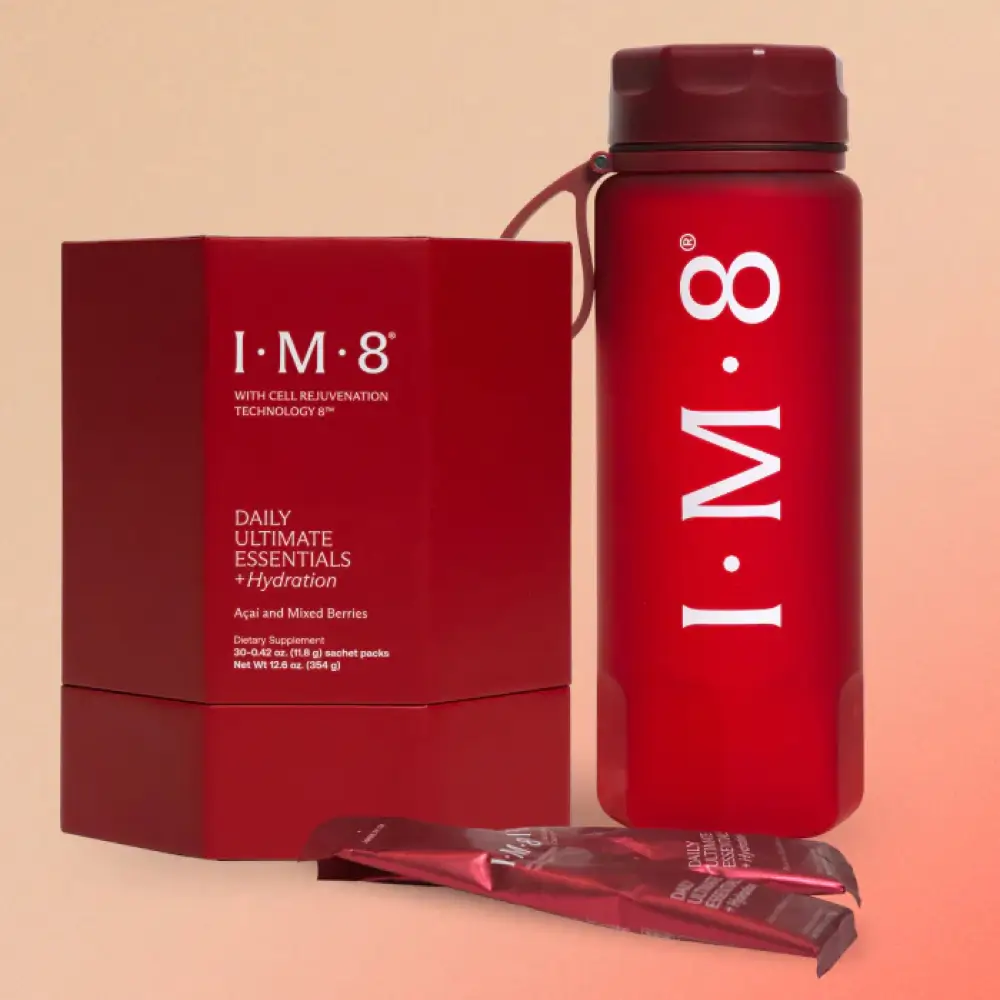
IM8 Health