



Encha Matcha Review: Which Grade Is Actually Worth Buying?
Encha is a US matcha brand founded in San Francisco in 2014 by Li Gong, selling USDA Certified Organic Japanese matcha in three grades. Here is our analysis of its official product pages, its published caffeine figure, its four sourcing regions, its real prices by format and the return policy you should read before ordering.




Our verdict on Encha in brief
Encha does the two things that matter in matcha and that almost nobody does together: it certifies the tea USDA Organic, first harvest, shade-grown and stone-ground, and it publishes the numbers, about 60 mg of caffeine and 24 mg of L-theanine per 2 g serving, with a fixed 2 g serving across every format. The grade structure is honest too, Ceremonial Grade for water at $19.99 the 30 g pouch, Ceremonial Grade Latte for milk at $18.99, and a Barista Grade Latte at $11.99 for people who only drink lattes. The Culinary Grade some reviews still mention no longer exists.
Two reservations. The origin story is not consistent across the site: current product pages describe direct partnerships across Kagoshima, Miyazaki, Shizuoka and Uji, while older pages still say a single farm in Uji, so exclusive Uji sourcing is not accurate. And the return policy is strict, no returns or exchanges on any product, opened or unopened, with only a 7-day window for a defect or a shipping error. For US readers the purchase itself is simple: dollar pricing, free shipping on every order, 3 to 7 business days.

In this full review we go through the real grades, the published caffeine figure, the sourcing, the price of every format and the return terms of Encha, based on the brand's official product pages and policies.
Brand scores
Product scores
User experience
Shipping and customer service
Our analysis of Encha: the matcha grades under the microscope
This review is an analysis of the official Encha product pages, its FAQ, its farm page and its policies. We did not brew and rate the tea: what can be checked on a matcha is the grade, the harvest, the origin, the cultivars, the caffeine figure and the price per gram, and Encha publishes most of that. Encha is a US company selling in dollars, and its shipping policy advertises free standard shipping on US orders, delivered in 3 to 7 business days.
One thing to settle before the grades: Encha no longer sells a Culinary Grade. The entry-level milk powder is now called Barista Grade, and the range is organized as Ceremonial Grade for water, Ceremonial Grade Latte for milk, and Barista Grade Latte below them, with limited single-cultivar reserves and a family of flavored latte blends alongside.
📌 Ceremonial Grade Matcha: the reference for drinking plain
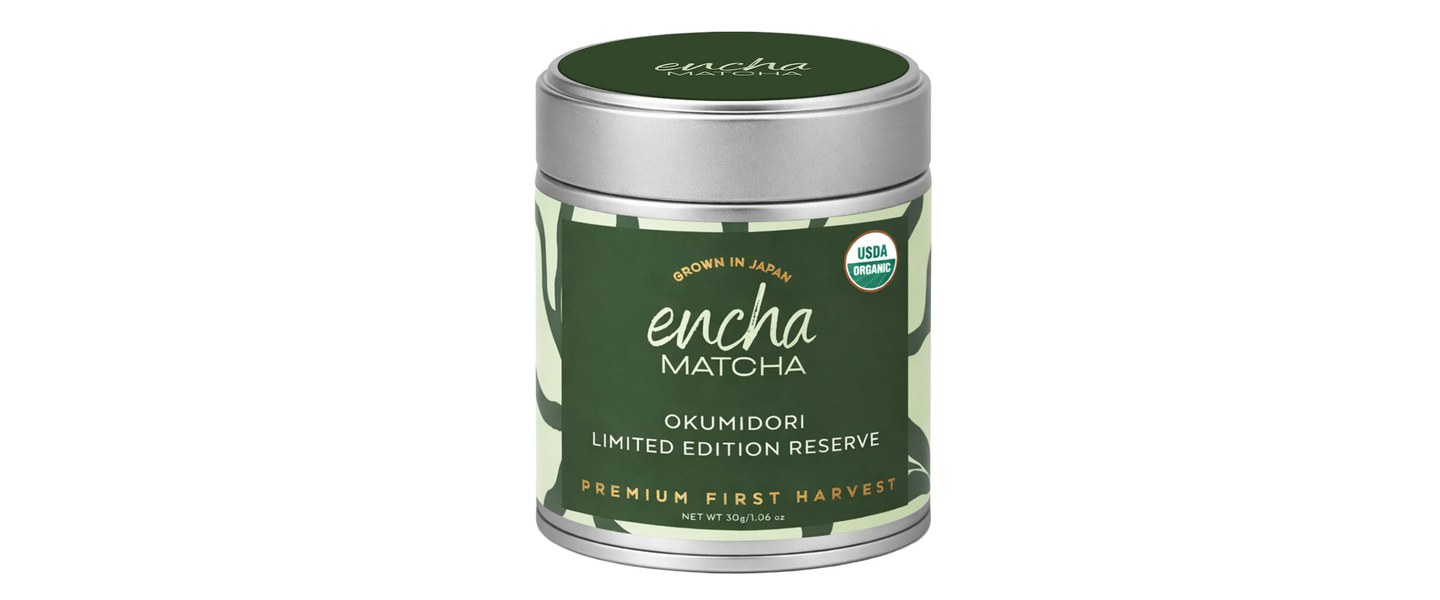
This is the flagship. The page describes spring's youngest leaves, shade-grown, hand-picked within 24 hours of harvest and stone-ground, master-blended from six cultivars sourced through twelve years of direct farm partnerships across Kagoshima, Miyazaki, Shizuoka and Uji. It is USDA Certified Organic and the brand states third-party testing for purity, with no additive, no sweetener and no filler. The stated preparation is one teaspoon, about 2 g, in 5 fl oz of water at around 160°F, whisked for roughly 15 seconds.
Pricing is by format and is the honest way to compare: $19.99 for the 30 g pouch, which the brand counts as 15 cups, $34.99 for 60 g, $189.99 for the 500 g food-service bag and $39.99 for a 30-pack of single-serve sticks. At the 30 g price that is about $1.33 a bowl before the code. The page displays 457 reviews at 4.9 out of 5, hosted on the store itself.
📌 Ceremonial Grade Latte: the same harvest, blended for milk
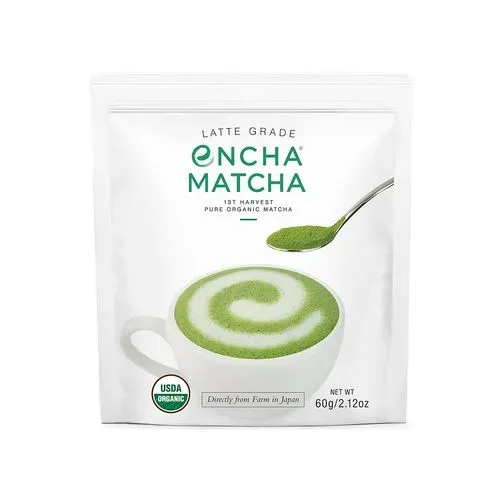
This is the product our sheet calls Latte Grade. Same first-harvest, shade-grown, stone-ground base, but master-blended from five cultivars rather than six and built to stay present in oat, almond or dairy milk. Same four sourcing regions, same USDA Organic certification, same third-party testing statement. The method adds a step: whisk the teaspoon with 5 fl oz of water at 160°F first, then pour the milk.
The prices are where the old sheet went wrong. The 30 g pouch, 15 lattes, is $18.99, not $24.99: $24.99 is the 60 g size. The 500 g bag is $139.99 and the 30-stick pack $29.99. With the LMC code at 20% off, the 30 g pouch comes to about $15.19. Note that the latte grade is cheaper than the ceremonial grade at the same weight, which is the opposite of what most buyers assume.
The verdict on format and dosing
Encha standardizes on 2 g per serving across the range, which makes every format directly comparable: 15 cups in a 30 g pouch, 30 in a 60 g, 250 in the 500 g bag. That consistency is rarer than it sounds in matcha, where brands quote servings without giving a gram weight. The small 30 g pouch is a deliberate choice: at one bowl a day it lasts about two weeks, and matcha loses aroma quickly once opened, so the smallest format is often the right one rather than the worst value.
If you drink lattes daily, the Barista Grade Latte is the format that changes the math: $11.99 for 30 g, $19.99 for 60 g, $89.99 for 500 g. It is built for milk and costs roughly half the ceremonial grade per gram. Buying the ceremonial powder to drown it in oat milk is the classic mistake, and Encha's own grade page says as much.
Effectiveness and what to expect
The number to hold on to is caffeine, and Encha publishes it: its FAQ states that one serving of 1 teaspoon, 2 g, contains about 60 mg of caffeine, roughly two thirds of a standard 8 oz cup of coffee. The brand also states 24 mg of L-theanine per serving. That is the whole pharmacological story of a matcha, and it means a bowl is a real caffeinated drink, to be counted against your daily total and avoided late in the day.
Everything else the brand says about the experience, calm and focused energy without a crash, is its own framing of the caffeine and L-theanine combination, not a demonstrated outcome. Matcha is a caffeinated food, not a treatment. Encha itself tells pregnant or nursing readers and anyone managing a medical condition to speak with their doctor before making it a routine, which is the right instruction and worth repeating here.
Who is Encha?
Encha was founded in San Francisco on November 18, 2014 by Li Gong, who left a Silicon Valley VP job after tasting organic matcha on a Japanese farm. The brand's stated mission has not moved since: organic-only matcha, sold direct, with the supply chain kept short. Its farm page claims visibility over the whole process, from growing to grinding to packaging, and publishes independent reports supporting its USDA organic status.
On origin, the site is not perfectly consistent and it is fair to say so. The current product descriptions state direct farm partnerships across four regions, Kagoshima, Miyazaki, Shizuoka and Uji, built over twelve years. Older pages, including the farm page and a product FAQ block, still describe a single farm in Uji. The product descriptions are the more specific and more recent statement, so a claim of exclusive Uji sourcing no longer holds. Encha does not lean on an independent review platform: the counts shown are its own, 457 reviews at 4.9 out of 5 on the Ceremonial Grade page and 303 at 5.0 on the Ceremonial Latte page.
📌 Key commitments
- USDA Certified Organic across the pure matcha range, with independent reports published on the farm page
- First-harvest leaves, shade-grown for about three weeks, hand-picked within 24 hours and stone-ground
- Direct farm partnerships across Kagoshima, Miyazaki, Shizuoka and Uji, described as twelve years old
- Caffeine published: about 60 mg per 2 g serving, with 24 mg of L-theanine
- Free standard US shipping on every order, subscriptions included, 3 to 7 business days
Ceremonial Grade Encha against a supermarket matcha
| Criteria |
Analyzed by TBS
Encha Ceremonial Grade Matcha
|
Standard supermarket matcha
|
|---|---|---|
| Certification | ✅USDA Certified Organic, reports published on the brand site | ❌Rarely certified organic |
| Harvest | ✅First harvest, shade-grown about three weeks, hand-picked within 24 hours | ❌Later harvests, unstated |
| Origin | ✅Direct farm partnerships across Kagoshima, Miyazaki, Shizuoka and Uji | ❌Origin usually limited to "Japan" |
| Caffeine stated | ✅About 60 mg per 2 g serving, with 24 mg L-theanine | ❌Almost never published |
| Serving transparency | ✅2 g per serving, 15 cups per 30 g pouch | ❌Servings quoted without a gram weight |
| Ships to the United States | ✅Yes, free standard shipping, 3 to 7 business days | ✅On the shelf, no shipping needed |
The table explains the premium. You are paying for a certified organic first harvest, a stated origin and a published caffeine figure, on a product you swallow whole rather than steep and discard, which is exactly why contaminant testing matters more for matcha than for leaf tea. Against a supermarket tin the gap is real. Against another specialist the argument is narrower, and it comes down to whether you value the four-region blend or would rather have a single-cultivar reserve.
The Encha range
Three grades of pure matcha. Ceremonial Grade, $19.99 for 30 g, $34.99 for 60 g, $189.99 for 500 g, $39.99 for 30 sticks. Ceremonial Grade Latte, $18.99 for 30 g, $24.99 for 60 g, $139.99 for 500 g, $29.99 for 30 sticks. Barista Grade Latte, $11.99 for 30 g, $19.99 for 60 g, $89.99 for 500 g. Above them sit two Limited Edition Reserves, single-cultivar Okumidori and Saemidori, at $39.99.
The flavored latte blends form the rest: Reishi Mushroom at $16.99 for 60 g, Vanilla at $16.95 for 60 g, Lavender at $26.95 for 60 g, Keto Collagen at $14.99 for 150 g and a Lightly Sweetened powder at $11.99 for 150 g or $24.99 for 500 g. These are not pure matcha, and their ingredient lists and dietary profiles differ, so read them separately. A subscription saves up to 15% and can be skipped, edited or cancelled.
Composition breakdown: what is actually in the pouch
The pure grades
The three matcha grades contain one ingredient: organic Japanese green tea leaf, ground. No sugar, no sweetener, no flavoring, no filler, non-GMO, dairy-free. What separates them is the leaf and the blend: six cultivars for the ceremonial grade, five for the ceremonial latte, and a lower-cost first-harvest blend for the barista grade. The three weeks of shading before harvest are what raise the L-theanine and give the powder its color, and the stone grinding is what makes it fine enough to suspend rather than sink.
The blends and reserves
The reserves are the opposite approach: a single cultivar, Okumidori or Saemidori, instead of a master blend, for readers who want to taste one leaf rather than a balanced profile. The flavored blends add ingredients that change everything about the label, reishi mushroom, vanilla, lavender, collagen or sweetener, and the collagen version in particular is no longer a vegan product. Anyone buying Encha for the one-ingredient argument should stay on the three pure grades.
Buying Encha from the United States
This is the easy part. Encha is a US brand selling in dollars from a US store, with free standard shipping on every US order including subscriptions, and a stated 3 to 7 business day delivery window. There is no customs step and no currency conversion. The LMC code is listed at 20% off an eligible order, which brings the 30 g Ceremonial pouch to about $15.99 and the 30 g Ceremonial Latte pouch to about $15.19. Subscription savings go up to 15% and generally do not stack with a code, so compare the two totals rather than the two percentages.
The one point to read carefully before ordering is returns, because Encha's policy is stricter than most. The official refund policy states that no returns or exchanges are accepted on any Encha product, opened or unopened, and that all sales are final. The only recourse is a defect, a shipping damage or a fulfillment error, reported by email within 7 days of delivery with photos of the problem, a photo of the packing slip and the order ID; Encha then replaces or refunds at its discretion. Claims after 7 days are not processed. Buy the 30 g pouch first rather than the 500 g bag.
Latte Grade Matcha Powder takes first place in our ranking of the best matcha powder for lattes, measured against 3 other options on dose, price per serving and delivery.
Technical analysis and expert verdict
Encha is technically coherent. USDA organic certification with published reports, first-harvest leaves, three weeks of shading, hand-picking within 24 hours, stone grinding, a stated 2 g serving with a published caffeine and L-theanine figure, and a grade structure that actually maps to a use rather than to a marketing tier. For a product consumed as whole suspended leaf, the certification and the testing statement are the right things to insist on, and the price is reasonable: $19.99 for 30 g of certified organic first-harvest matcha is not a luxury position.
The limits are three. The origin story is inconsistent between the current product pages, which name four regions, and older pages that still describe a single Uji farm; a brand this careful should align them. The review base is entirely on-site, so there is no independent platform to cross-check. And the return policy is genuinely restrictive: all sales final, opened or not, with a 7-day window that covers only defects and errors. With the LMC code at 20% off, the sensible first order is a 30 g pouch of the grade that matches your drink, ceremonial for water at about $15.99, ceremonial latte for milk at about $15.19, or the barista grade if the matcha never meets anything but oat milk.
The Encha flagship products
📌 Ceremonial Grade Matcha Powder
The flagship: a USDA Certified Organic first-harvest matcha, shade-grown, hand-picked within 24 hours and stone-ground, master-blended from six cultivars sourced across Kagoshima, Miyazaki, Shizuoka and Uji through twelve years of direct farm partnerships. Meant to be whisked with water alone, one teaspoon of about 2 g in 5 fl oz at 160°F. $19.99 for the 30 g pouch, counted as 15 cups, up to $189.99 for the 500 g bag.
📌 Ceremonial Grade Latte Matcha Powder
The same first harvest blended from five cultivars specifically for milk, hot or iced, oat, almond or dairy. Whisk with water at 160°F first, then add the milk. $18.99 for the 30 g pouch, 15 lattes, and $24.99 for 60 g, which makes it cheaper per gram than the ceremonial grade. Below it, the Barista Grade Latte starts at $11.99 for 30 g for daily latte drinkers.
Use the code LMC for 20% off an eligible order on the official Encha store, where US shipping is free on every order; compare it against the subscription saving of up to 15%, since the two do not normally stack.
Go further: browse the Encha Matcha brand page with the full product list, the Encha Matcha promo code LMC and the Ceremonial Grade Matcha Powder - Encha Matcha product sheet.
Our final verdict: should you buy from Encha?

The Best Supplements' editorial guidelines guarantee transparency and reliability: all our content is written by industry specialists and validated against 7 key criteria*, so every publication delivers quality information, promo codes, and reviews.
To support The Best Supplements, links on this site are affiliate links: we may earn a commission when you buy through these links, at no extra cost to you. By using the site you accept our terms of use and our editorial policy.

🎁 Want a -50% promo code you won't find anywhere else?
We negotiated an exclusive -50% promo code for you with a very well-known mushroom coffee brand. Interested? Subscribe and get your code straight to your inbox.
The 7 key criteria behind our reviews
Every piece of content published on The Best Supplements is carefully written by passionate experts, following a rigorous process. The Best Supplements is committed to providing information that is reliable, useful, and enjoyable to read.
Specialized, committed writers

Rigorous research behind every fact
Full transparency on sources
Focused on your real needs
Original, authentic content
Articles updated continuously
Compliance with standards and editorial ethics

Our favorite brand this month 🧡
Our pick of the month, one to try without hesitation.
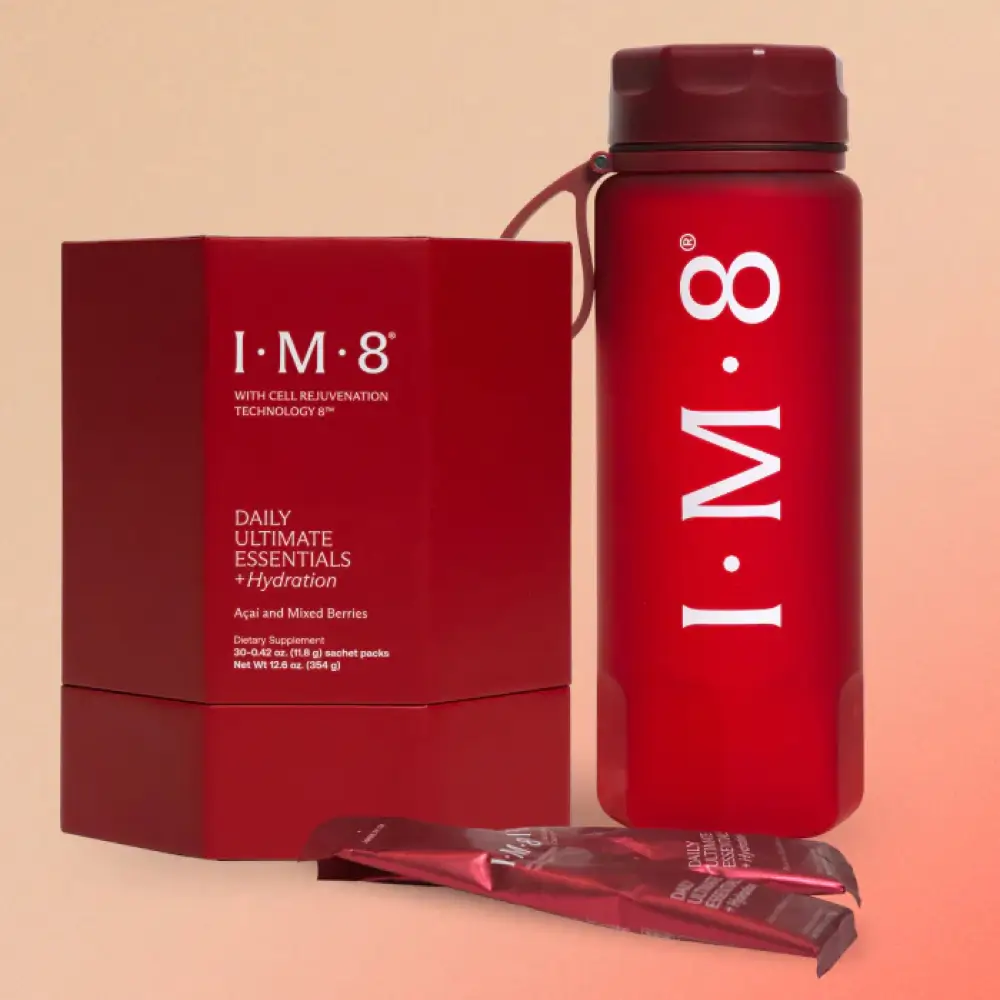
IM8 Health