




Matcha Sunday Review: Is the Shizuoka Matcha Worth Its Price?
Matcha Sunday is an American brand, not a French one, selling Japanese matcha from a family-owned farm in Shizuoka in four grades. Here is our analysis of its official product pages: the real dollar prices, the published caffeine figure, what the ceremonial grade does and does not disclose, and the return policy that makes a first order final.





Our verdict on Matcha Sunday in brief
Matcha Sunday gets the basics right in a category built on vagueness. One ingredient, a named single source, a family-owned farm in Shizuoka, shade growing and granite stone milling described with a real rate rather than an adjective, and a published caffeine figure of about 40 mg per 1 g cup. The range now runs four grades: Culinary at $25.99 for 50 g, Hojicha at $27.99, Ceremonial at $35.99 for the 30 g tin and $39.99 for the 50 g bag, and a Masters Collection in single-cultivar Okumidori at $42.99. Two formats is well out of date.
Two things to know before ordering. The ceremonial grade names its farm but not its cultivar, its harvest date or a lot-specific contaminant report, which is where a Japanese specialist would go further. And under the official refund policy, matcha and other consumables are final sale once shipped; only accessories carry a 14-day return. The company is American, its policies signed Matcha Sunday LLC, and it ships from the United States with free delivery over $50.

In this full review we go through the real grades, the published caffeine figure, the sourcing, the price per gram of every format and the return terms of Matcha Sunday, based on the brand's official product pages and policies.
Brand scores
Product scores
User experience
Shipping and customer service
Our analysis of Matcha Sunday: the powders under the microscope
This page is an analysis of Matcha Sunday's official product pages, its catalog data and its policies, not a personal tasting. On a single-ingredient product like matcha, the checkable facts are the grade, the origin, the milling, the serving size, the caffeine figure and the price per gram, and the brand publishes all of them. It is a US company: its shipping and refund policies are signed Matcha Sunday LLC, and its terms of service add that the site is operated by Matcha Sunday represented by Brand Nest LLC. Orders ship from the United States, with free shipping over $50.
One correction before the products, because it has been repeated in several places: Matcha Sunday is not a French brand. The tea is grown and milled in Japan, but the company selling it is American, and the store prices are dollars, not converted euros.
📌 Ceremonial Grade Matcha, 30 g tin: the entry point
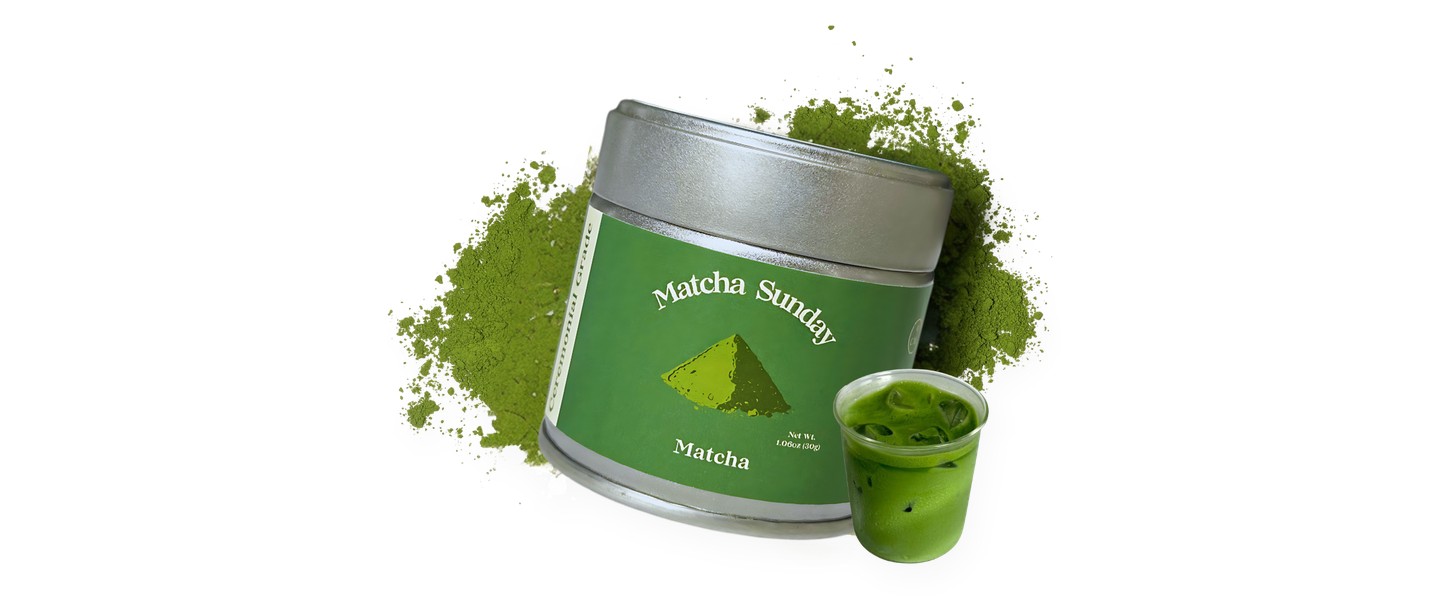
The 30 g tin is the format the brand pushes hardest and the one to start with. One ingredient, 100% Japanese ceremonial-grade matcha, from a family-owned farm in Shizuoka according to the page's own FAQ. Shade-grown for weeks before harvest, then stone-milled on granite at a stated rate of about 30 g an hour, which is the detail that keeps the powder from scorching and turning bitter. Zero added sugar, non-GMO, made in Japan, shipped from the USA.
The tin holds about 30 servings and the brand publishes roughly 40 mg of caffeine per cup, about half a coffee. The one-time price is $35.99, marked against a $60.00 reference. Subscription plans price the same tin at $36.99 less: $33.29 a month on a monthly plan, $31.49 on a two-month plan and $26.99 on a four-month plan, each with free shipping and a welcome kit, and renewals at 5% off. The product page shows 26 reviews at 4.96 out of 5, hosted on the store itself.
📌 Ceremonial Grade Matcha, 50 g bag: the same tea, better value
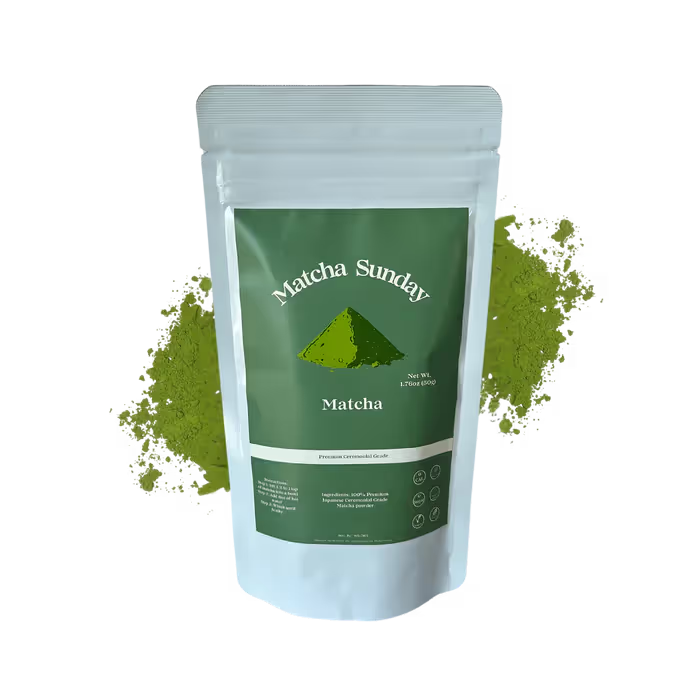
Same powder, same Shizuoka origin, same 40 mg caffeine estimate, in a 50 g resealable bag rated at 50 servings. The one-time price is $39.99 against an $80.00 reference, which works out at $0.80 a gram against $1.20 for the tin. If you drink matcha daily, this is the format that makes sense; the tin protects the powder better and is easier to finish while fresh, which matters more for an occasional drinker.
Subscription pricing on the bag runs $36.99 a month for one, $34.99 each for two and $29.99 each for four, with free shipping and the welcome gifts. Multi-bag packs are also sold outright, from $79.98 for two up to $199.95 for five, and a 1 kg wholesale format exists at $550.00. The page displays 96 reviews at a stated 4.8 star rating.
📌 Masters Collection: a single cultivar above the ceremonial grade
This is the piece missing from most write-ups of this brand. The Masters Collection sits a step above the ceremonial grade and is the only product in the range with a named cultivar: 100% Okumidori, shade-grown and stone-ground into an ultra-fine powder that the brand describes as rich in umami with no bitterness. It is sold to be whisked with water and drunk on its own, not turned into a latte.
Prices: $42.99 for the 30 g tin, $59.99 for the 50 g bag, and $720.00 for a 1 kg format. Naming the cultivar is a genuine transparency step, and it is worth noting that the brand does it here and not on the ceremonial grade, where the farm is described but the cultivar and harvest date are not.
The verdict on format and dosing
Matcha Sunday works on a 1 g serving, which is lighter than the 2 g most Japanese specialists use. That single decision explains a lot: 30 servings in a 30 g tin, 50 in a 50 g bag, and roughly 40 mg of caffeine per cup rather than the 60 mg you get from a 2 g bowl. It also means a price comparison against another brand has to be done per gram, not per stated serving, or the numbers stop meaning anything.
At $0.80 a gram for the 50 g ceremonial bag, a 1 g cup costs about $0.80 of powder, and the brand's own $1.40 a cup figure allows for a heavier scoop. That is a fair position: not the cheapest matcha, well below a cafe, and clearly above a supermarket tin. If you are only making lattes, the Culinary Grade at $25.99 for 50 g is the honest recommendation, and the brand says so itself on its pages.
Effectiveness and what to expect
Matcha is a caffeinated drink and should be judged as one. The verified figure is about 40 mg of caffeine per 1 g cup, which is roughly half a standard coffee, and the brand attributes the smoother feel to the L-theanine naturally present in shade-grown leaf. That is the brand's framing, and while the caffeine and L-theanine combination is well documented for alertness, no matcha can guarantee an absence of jitters, palpitations, reflux or disturbed sleep. Dose, timing and individual sensitivity decide that.
The other claim on the page, 137 times the antioxidants of green tea, is the brand's own comparison and no batch value for EGCG or L-theanine is published, so it should be read as marketing rather than as a measured figure. Anyone pregnant or breastfeeding, sensitive to caffeine, living with an arrhythmia, low iron or an anxiety disorder, or taking medication that interacts with caffeine, should talk to a doctor before making it a daily habit.
Who is Matcha Sunday?
Matcha Sunday is an American company built around a single Japanese supply line. Its refund and shipping policies are signed Matcha Sunday LLC, and its terms of service state that the website is operated by Matcha Sunday represented by Brand Nest LLC. The store is US-based, prices in dollars, and ships from the United States. There is no French entity behind it, contrary to what has been written elsewhere including on our own pages until this update.
On sourcing the brand is specific for a young company: a family-owned farm in Shizuoka, Japan, described as shading the leaves and whisk-testing every harvest before it ships. Shading for weeks before picking, stone milling on granite at about 30 g an hour, airtight packing. What it does not publish for the ceremonial grade is the cultivar, the harvest date, an organic certification or a lot-specific contaminant report, and that gap is the main thing separating it from the Japanese specialists. The brand says it is loved by more than 30,000 customers; the review counts we could verify are the ones on its own product pages, 26 on the 30 g tin and 96 on the 50 g bag.
📌 Key commitments
- One ingredient: 100% Japanese matcha, no added sugar, no filler, non-GMO
- Stated single source: a family-owned farm in Shizuoka, shade-grown and stone-milled on granite
- Caffeine published: approximately 40 mg per 1 g cup
- A named cultivar, 100% Okumidori, on the Masters Collection
- US company, ships from the United States, free shipping on orders over $50
Ceremonial Grade Matcha Sunday against a supermarket matcha
| Criteria |
Analyzed by TBS
Ceremonial Grade Matcha by Matcha Sunday
|
Standard supermarket matcha
|
|---|---|---|
| Origin | ✅A named family-owned farm in Shizuoka, Japan | ❌Origin usually limited to "Japan" or unstated |
| Milling | ✅Stone-milled on granite at about 30 g an hour | ❌Industrial milling, method unstated |
| Caffeine stated | ✅Approximately 40 mg per 1 g cup, published | ❌Almost never published |
| Serving transparency | ✅1 g serving, 30 servings per tin, 50 per bag | ❌Servings quoted without a gram weight |
| Named cultivar | ✅Yes on the Masters Collection: 100% Okumidori | ❌Never |
| Ships to the United States | ✅Yes, ships from the USA, free over $50 | ✅On the shelf, no shipping needed |
The table shows what the premium buys and where it stops. Against a supermarket tin the gap is real: a named farm, a stated milling method, a published caffeine figure and a serving size in grams. Against a Japanese specialist the argument thins out, because the ceremonial grade does not name its cultivar, its harvest or its lot testing, and only the Masters Collection goes that far. Note also that ceremonial grade is a commercial description, not a regulated US standard.
The Matcha Sunday range
Four powders, in ascending order of price per gram. Culinary Grade, built for lattes and baking: $25.99 for 50 g, $41.99 for 100 g, $220.00 for 1 kg. Hojicha Powder, roasted and naturally low in caffeine for the evening: $27.99 for 50 g. Ceremonial Grade: $35.99 for the 30 g tin, $39.99 for the 50 g bag, $550.00 for a 1 kg wholesale format. Masters Collection, single-cultivar Okumidori: $42.99 for 30 g, $59.99 for 50 g, $720.00 for 1 kg.
Around them, multi-packs and bundles from $65.99 to $129.99, a Ceremonial Matcha Starter Bundle with the 30 g tin at $59.99 and a Matcha Ritual Starter Set at $65.99. Sold separately: a bamboo whisk at $22.00, a whisk and scoop set at $28.00, a bamboo scoop at $9.00, a sifter at $9.00 and a handmade glass bowl at $32.00. Describing this brand as selling two formats is well out of date: the catalog now spans four grades and a full accessory line.
Composition breakdown: what is actually in the bag
The grades, side by side
Every powder in the range has a one-line ingredient list. Ceremonial Grade: 100% premium Japanese ceremonial-grade matcha, harvested in Shizuoka, fine powder, vibrant green, described as smooth with a subtle sweetness. Masters Collection: 100% premium Japanese matcha, Masters Collection grade, cultivar 100% Okumidori, ultra-fine and stone-ground. Culinary Grade: 100% premium Japanese culinary-grade matcha, a bolder, rounder flavor that holds up against milk, sweeteners and heat. Hojicha: 100% Japanese roasted green tea, warm reddish brown, toasty and nutty. No sugar, no milk powder, no flavoring, no filler anywhere in the range.
What the leaf carries
Because matcha is the whole milled leaf rather than an infusion, a cup carries the caffeine, the L-theanine, the catechins and the chlorophyll of the leaf itself. The brand quantifies only the caffeine, at about 40 mg per 1 g cup, and describes L-theanine and antioxidants qualitatively without publishing batch values. Shading before harvest is what raises the L-theanine and the chlorophyll, which is why shade-grown leaf tastes sweeter and looks greener, and the brand states that step for both the ceremonial grade and the Masters Collection.
Buying Matcha Sunday from the United States
This is a domestic purchase. Matcha Sunday ships from the United States, prices in dollars, and its site advertises free shipping on orders over $50; below that, shipping is calculated at checkout, and the shipping policy states that promotional thresholds can change without notice. Subscription plans include free shipping at every tier. There is no customs step and no currency conversion.
Returns are the point to read before ordering. Under the official refund policy, all matcha and consumable products are final sale and cannot be returned or exchanged once shipped, for food-safety reasons; the brand invites dissatisfied customers to contact it by email instead. Non-consumable items, accessories and teaware, carry a 14-day return window from delivery, unused and in original packaging, with return postage paid by the customer. Damaged or incorrect items should be reported on arrival. Refunds are issued to the original payment method within 10 business days of the return being approved. The LMC code is listed at 20% off an eligible first order, which brings the 50 g bag to about $31.99 and the 30 g tin to about $28.79; since a single bag lands below the $50 free-shipping threshold, ordering two brings the total to about $61 and ships free.
Our ranking of the best matcha powder for lattes puts Ceremonial Grade Matcha Powder in fourth place, alongside 3 other options weighed on cost per serving and shipping.
Technical analysis and expert verdict
The strengths are real and specific. A single named source, a family-owned farm in Shizuoka rather than an anonymous broker. Shade growing and granite stone milling described concretely, with a rate rather than an adjective. A published caffeine figure of about 40 mg a cup, which almost nobody in this category gives. A serving stated in grams, so the yield claims can be checked. A four-grade range that lets you match the powder to the drink instead of pouring ceremonial matcha into oat milk, and a Masters Collection that goes as far as naming the Okumidori cultivar. And for a US buyer, dollar pricing, domestic shipping and free delivery over $50.
The limits are transparency and terms. On the ceremonial grade the brand names the farm but not the cultivar, the harvest date, an organic certification or a lot-specific contaminant report, which is where a Japanese specialist would go further. The marketing leans hard on no jitters and no crash, and on a 137 times antioxidant comparison with no published batch value behind it. Consumables are final sale once shipped, so the first order is a commitment. And the one-time price sits above the subscription at every tier, which pushes you toward a recurring plan you should price on the renewal rate, 5% off, rather than on the introductory one. With the LMC code at 20% off a first order, the 50 g bag at about $31.99 is a fair place to test the brand.
The Matcha Sunday flagship products
📌 Ceremonial Grade Matcha Powder, 30 g tin
The brand's entry point: 100% Japanese ceremonial-grade matcha from a family-owned farm in Shizuoka, shade-grown and stone-milled on granite at about 30 g an hour. One ingredient, zero added sugar, non-GMO. About 30 servings of 1 g, with a published figure of roughly 40 mg of caffeine per cup. $35.99 one-time, or from $26.99 a month on the four-month subscription with free shipping and a welcome kit.
📌 Ceremonial Grade Matcha Powder, 50 g bag
The same tea in the value format: 50 servings, $39.99 one-time, which is $0.80 a gram against $1.20 for the tin. Subscriptions run from $29.99 a month. Above it sits the Masters Collection, the only product in the range with a named cultivar, 100% Okumidori, at $42.99 for 30 g; below it, the Culinary Grade at $25.99 for 50 g is the one built for lattes and baking.
Use the code LMC for 20% off an eligible first order on the official Matcha Sunday store, and remember that a single bag falls below the $50 free-shipping threshold while two clear it.
Go further: browse the Matcha Sunday brand page with the full product list, the Matcha Sunday promo code LMC and the Ceremonial Grade Matcha Powder - Matcha Sunday product sheet.
Our final verdict: should you buy from Matcha Sunday?

The Best Supplements' editorial guidelines guarantee transparency and reliability: all our content is written by industry specialists and validated against 7 key criteria*, so every publication delivers quality information, promo codes, and reviews.
To support The Best Supplements, links on this site are affiliate links: we may earn a commission when you buy through these links, at no extra cost to you. By using the site you accept our terms of use and our editorial policy.

🎁 Want a -50% promo code you won't find anywhere else?
We negotiated an exclusive -50% promo code for you with a very well-known mushroom coffee brand. Interested? Subscribe and get your code straight to your inbox.
The 7 key criteria behind our reviews
Every piece of content published on The Best Supplements is carefully written by passionate experts, following a rigorous process. The Best Supplements is committed to providing information that is reliable, useful, and enjoyable to read.
Specialized, committed writers

Rigorous research behind every fact
Full transparency on sources
Focused on your real needs
Original, authentic content
Articles updated continuously
Compliance with standards and editorial ethics

Our favorite brand this month 🧡
Our pick of the month, one to try without hesitation.
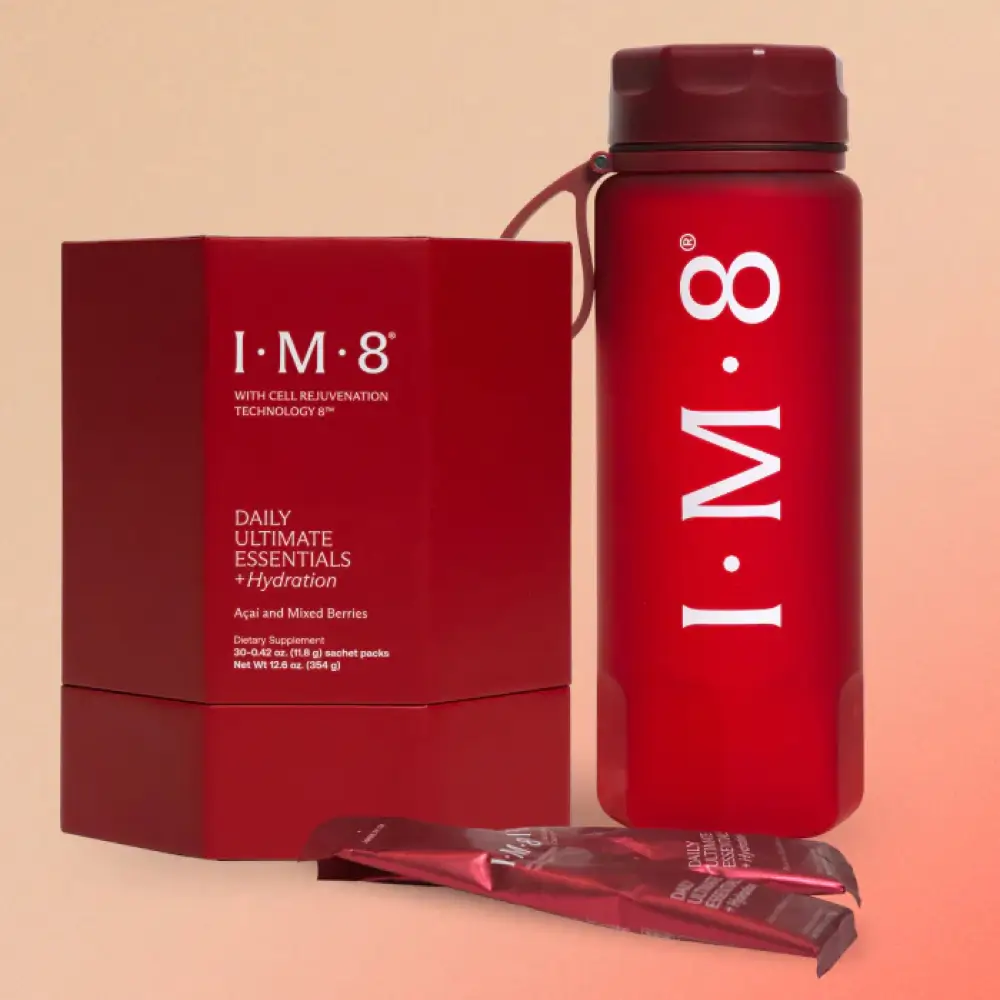
IM8 Health