




Matchaeologist Review: Is This Uji Matcha Worth the Price?
Matchaeologist sells Uji matcha through an Americas store priced in dollars, with four ceremonial grades from $18.00 to $28.00 and delivery to the United States in 1 to 3 business days. Here is our analysis of the grades, the real prices, the preparation method and what the brand does and does not document.






Our verdict on Matchaeologist in brief
Matchaeologist is one of the few matcha sellers that builds a readable ladder instead of a single vague ceremonial powder: Maya at $18.00, Meiko at $20.00, Matsu at $22.00 and Misaki at $28.00 for 20 g, plus two culinary grades and a deep-roasted Uji houjicha. Its FAQ states that all of its matcha is produced in Uji, in Kyoto prefecture, and that the leaf is ground on granite stone mills at a rate of about 20 g an hour. Every page publishes a real preparation method, about 1 g of powder wetted with 15 ml of water at 160°F then completed with 70 ml, which is what makes the cost per bowl comparable with other brands.
Two clarifications matter. The teas are described as grown organically with strict adherence to the Japanese Agricultural Standards, which is a statement of practice and not an organic certification, since no certifying body or certificate is published. And the documentation stops at the process: no harvest date, no cultivar, no named farm and no lot certificate for pesticides or heavy metals. For an American reader access is easy, with delivery in 1 to 3 business days and free express shipping from $100, but tea is a final sale under the return policy.


In this review we go through the four ceremonial grades and their real prices, the stated Uji origin, the preparation method, what the brand documents and what it does not, and the US purchase terms.
Brand scores
Product scores
User experience
Shipping and customer service
Our analysis of Matchaeologist: the matchas under the microscope
This review is built from the official Matchaeologist product pages, the store FAQ, the refund policy and the terms of service. It is not a tasting: nobody on the team whisked these matchas, and describing a flavor we did not experience would tell you nothing. The grades, the prices, the stated origin, the preparation method and the purchase terms, on the other hand, can all be checked.
For an American reader the access question is settled quickly. The Americas store prices in US dollars, the FAQ states the brand ships worldwide with delivery to the United States in 1 to 3 business days, and free express shipping applies from $100. There is no import to organize and no currency conversion.
📌 Misaki: the top of the ceremonial range
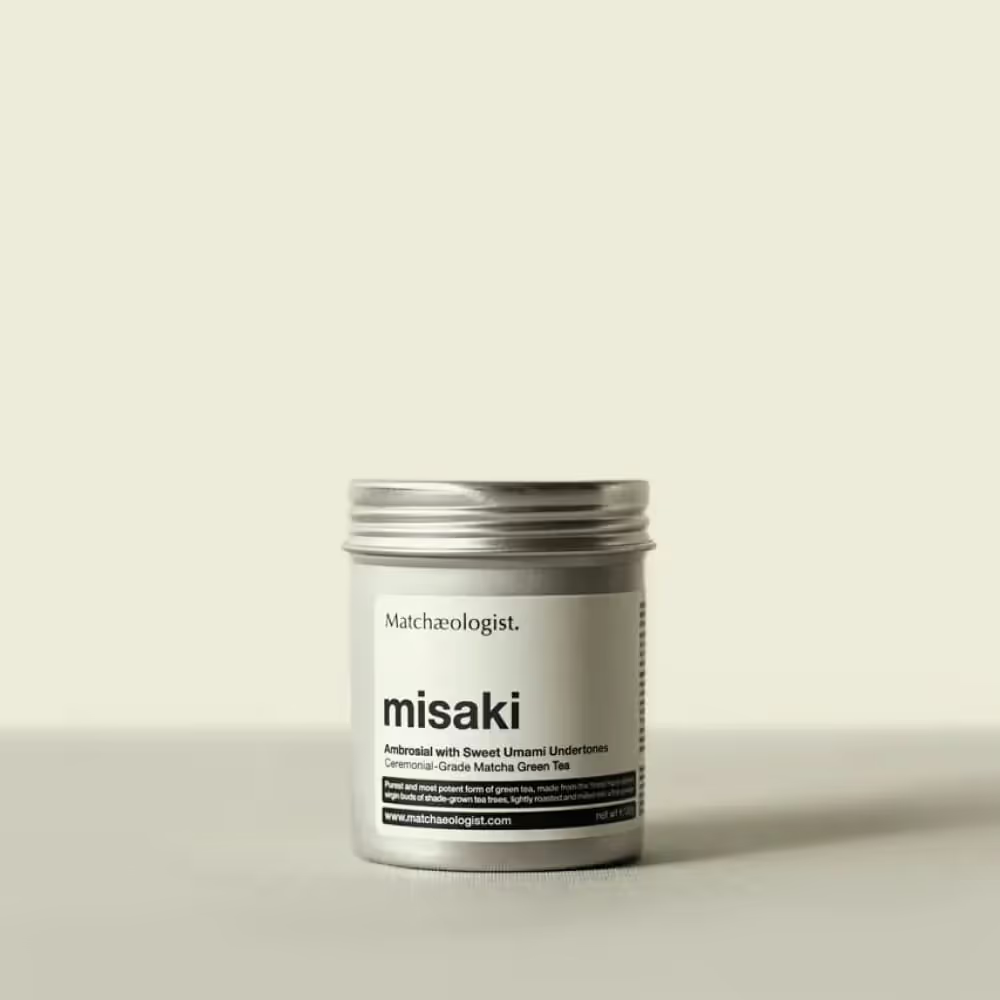
Misaki is the most expensive matcha in the catalog at $28.00 for a 20 g tin, and the only ceremonial tier currently in stock alongside Meiko and Maya. The brand describes it as made from the topmost leaves of shade-grown tea trees cultivated for more than thirty years before harvest, with a buttery-sweet profile, roasted aromas and pronounced umami, and presents it as suitable for koicha, the thick ceremonial preparation, as well as for standard usucha.
At the brand's own preparation guide of about 1 g per bowl, the tin gives roughly twenty servings, which puts the cost at about $1.40 a bowl, or about $1.19 with the 15% code. Two remarks. The page carries no batch-specific caffeine, L-theanine or catechin figure, so no precise intake can be assumed. And its copy stretches into talk of immunity and alpha-wave states, which is marketing language: matcha is a whole-leaf green tea, it contains caffeine and L-theanine, and nothing more should be read into it.
📌 Matsu: the roasted signature, currently unavailable

Matsu is the brand's signature ceremonial matcha and the one whose price our previous version had wrong: it is $22.00 for 20 g, not $28.00, which is the Misaki price. Its distinguishing feature is an artisanal roasting step, which the brand attributes to a technique handed down through generations of matcha makers, giving what it describes as a deep pine green, roasted aromas and a creamy body it compares to an espresso.
One practical point matters as much as the description: the tin is out of stock at the time of writing, and its page indicates early October. At $22.00 for about twenty bowls it works out to roughly $1.10 a serving, about $0.94 with the code, which makes it the most accessible way into the roasted style once it returns. Its intensity also survives milk better than Misaki, so it is the more sensible choice for lattes.
📌 Meiko and Maya: the affordable ceremonial tiers
These two are what make the range worth a look for regular drinking. Meiko is $20.00 for 20 g, $69.00 for 100 g and $550.00 for a kilogram, described as full-bodied with floral notes and a salted caramel undertone. Maya is $18.00 for 20 g, $59.00 for 100 g and $330.00 for a kilogram, presented as clean and balanced with mellow umami, minimal bitterness and a bright finish, and explicitly suited to lattes as well as traditional bowls.
At about $1.00 and $0.90 a bowl, and considerably less in the 100 g format, they answer the main objection to this brand, which is the cost per cup of a 20 g tin. Anyone drinking matcha daily should start here rather than at the top of the range, and keep Misaki for the bowls that deserve it.
The verdict on format and dosing
The preparation method published on every ceremonial page is precise, which is rarer than it sounds: half a teaspoon, about two bamboo scoops or roughly 1 g, wetted with 15 ml of water at 70°C or 160°F, kneaded into a smooth paste with the whisk, then completed with 70 ml. Storage instructions follow: cool, dry, away from light and odors, and refrigerated after opening.
The 1 g reference is what makes the cost per cup comparable. Several brands quote a 2 g serving, which halves their apparent number of cups and doubles their cost per bowl, so compare grams rather than tins. The 20 g format is the real constraint here: it is a three-week tin at a bowl a day, and only the culinary and mid-tier ceremonial grades come in 100 g or larger.
Effectiveness and what to expect
Matcha is a drink, not a supplement. Whisking the whole leaf into suspension means more caffeine, L-theanine and catechins than an infusion of the same tea, which is the only mechanism worth stating. The brand publishes no batch value for any of those compounds, so the honest position is that intake varies with the grams used and the harvest.
On safety, the FAQ states that the teas undergo radiation and pathogen testing and that the company follows the FSSC 22000 food safety framework, but no downloadable lot certificate is published for pesticide residues or heavy metals. Caffeine deserves the usual attention for anyone pregnant, sensitive to stimulants or managing sleep, and green tea can interfere with iron absorption and with some medications.
Who is Matchaeologist?
The company behind the Americas store is Matchaeologist LLC, and its terms of service state that they are governed by the laws of Washington DC. The store presents itself as Matchaeologist USA in its own help pages, sells in dollars and ships worldwide. Its FAQ states that all of its matcha is produced in Uji, in Kyoto prefecture, the region that made this tea's reputation, and that the leaf is ground on traditional granite stone mills, a slow process the brand says takes up to an hour to produce about 20 g.
On the organic question, the wording deserves attention. The FAQ says the teas are grown organically and that the company adheres strictly to the Japanese Agricultural Standards, the JAS framework. Adhering to a standard is not the same as holding a certification, and no certifying body or certificate number is published, so this is a statement of practice rather than a certified organic claim. Independently, its Trustpilot profile shows 4.5 out of 5 across 30 reviews, checked today, which is a thin base to lean on.
📌 Key commitments
- All matcha stated as produced in Uji, Kyoto prefecture
- A tiered range with four ceremonial grades and two culinary grades, priced accordingly
- Traditional granite stone grinding, which the brand says yields about 20 g an hour
- A precise preparation method published on every page: about 1 g, 15 ml at 160°F, then 70 ml
- Radiation and pathogen testing, with the FSSC 22000 food safety framework cited in the FAQ
- Free express shipping on US orders from $100, with delivery in 1 to 3 business days
Misaki against a standard ceremonial matcha
| Criteria |
Analyzed by TBS
Misaki by Matchaeologist
|
Standard ceremonial matcha
|
|---|---|---|
| Grades offered | ✅Four ceremonial tiers from $18.00 to $28.00, plus two culinary grades | ❌One undifferentiated ceremonial powder |
| Stated origin | ✅Uji, Kyoto prefecture, for all the matcha | ❌Often just Japan |
| Organic status | ❌Grown organically per the FAQ, with no certification published | ❌Rarely certified |
| Preparation published | ✅About 1 g, 15 ml at 160°F, then 70 ml, on every page | ❌Vague spoon guidance |
| Price per bowl | ❌About $1.40 at $28.00 for 20 g | ✅Often $0.75 to $1.25 |
| Ships to the United States | ✅Yes, 1 to 3 business days, free express from $100 | ✅Depends on the brand |
The table shows a brand that documents its process well and its lots poorly. Naming Uji, publishing a real preparation method and separating four ceremonial tiers instead of selling one vague grade are all above the market average. The two red marks are the ones to weigh: an organic claim that is a statement of practice rather than a certification, and a price per bowl at the top of the range that only makes sense if you are buying for the ritual rather than the routine.
The Matchaeologist range
The catalog is short and clearly tiered. On the ceremonial side: Misaki at $28.00, Matsu at $22.00, Meiko at $20.00 and Maya at $18.00 for 20 g, with Meiko and Maya also sold in 100 g at $69.00 and $59.00 and in kilogram formats. On the culinary side, Midori is $16.00 for 20 g, $49.00 for 100 g and $240.00 for a kilogram, with Mirai available in bulk from $180.00 a kilogram. A deep-roasted Uji houjicha powder completes the teas at $29.00 for 100 g.
Teaware is a real part of the offer rather than an afterthought: a traditional chasen whisk at $20.00, a full-hand chasen at $23.00, a bamboo chashaku scoop at $14.00, a handblown cloud glass chawan at $20.00, a glass katakuchi serving bowl at $67.00 and a complete brewing kit at $80.00. Gift vouchers are available from $20.00.
Composition breakdown: what the matchas are actually made of
One ingredient, four tiers
Every tin contains one thing: Japanese green tea powder, with no added sugar, milk powder or flavoring, which is worth saying in a market where latte mixes are sold as matcha. What separates the tiers is the leaf and the processing: Misaki uses the topmost leaves of long-established shade-grown plants, Matsu adds the artisanal roasting step, Meiko is presented for its floral aroma and Maya for its balance. The culinary grades, Midori and Mirai, are built for intensity through milk and sugar rather than for a bowl of water.
What is not published
The gaps are consistent across the range: no harvest date, no cultivar, no named farm or processor, no batch caffeine or catechin value and no downloadable certificate for pesticide residues or heavy metals on the product pages. For a brand whose entire argument is grade and origin, that is the missing piece, and it is what separates it from the tea sellers that publish a farm address and a lot report.
Buying Matchaeologist from the United States
This one is straightforward. The Americas store prices in dollars, the FAQ states that Matchaeologist ships worldwide and gives United States delivery at 1 to 3 business days, against 24 to 48 hours in the United Kingdom and one to two weeks in Europe. Shipping is calculated at checkout from the weight and the destination, and free express shipping applies to US orders of $100 or more, which is about four premium tins.
The return policy is the point to read before ordering. Products can be returned within 30 days of purchase, but the policy states that because of the perishable nature of the tea, returns of tea cannot be accepted: in practice only teaware is eligible, unused and in its original packaging, sale items are excluded, the buyer pays return postage and the refund is issued within 14 days of approval. Tea is therefore a final sale, which argues for a single 20 g tin of a grade you have not tried rather than a set. Promo code LMC takes 15% off eligible purchases, bringing Misaki to about $23.80 and Matsu to about $18.70, and it is unlikely to combine with the store's own multi-tin offers.
Technical analysis and expert verdict
What we like is the clarity of the ladder. Four ceremonial grades with real price gaps, two culinary grades, a stated Uji origin, a granite stone grinding process the brand describes in detail, a preparation method published in grams and milliliters, and teaware that matches. For a US reader, delivery in 1 to 3 business days with free express above $100 removes the friction that usually comes with Japanese tea. Meiko at $20.00 and Maya at $18.00 are the sensible entry points, and the 100 g formats bring the cost per bowl down where daily drinking is concerned.
The reservations are about evidence rather than taste. The organic wording is a statement of adherence to the JAS framework, not a certification, and we no longer present it as one. No harvest, cultivar, farm or lot certificate is published, the top tier costs about $1.40 a bowl, the Matsu tin is out of stock with an early October indication, tea cannot be returned, and the independent review base is thin at 30 Trustpilot reviews. Our position: yes for a drinker who wants a documented grade ladder and is buying for the ritual, with a preference for a single mid-tier tin on a first order, and code LMC for 15% off.
The Matchaeologist flagship products
📌 Misaki Ceremonial Matcha
The top of the range at $28.00 for a 20 g tin, made from the topmost leaves of shade-grown plants the brand says have been cultivated for more than thirty years. At its own guide of about 1 g a bowl that is roughly twenty servings, about $1.40 each, or $23.80 for the tin with the promo code. The grade that justifies koicha, the thick ceremonial preparation.
📌 Matsu Ceremonial Matcha
The signature roasted matcha at $22.00 for 20 g, about $18.70 with the code, and the better choice for lattes since its intensity survives milk. The artisanal roasting step is what makes it unusual in a category where almost everyone simply grinds dried tencha. The tin is out of stock at the time of writing, with the page indicating early October.
Promo code LMC takes 15% off eligible purchases on the official Americas store. It is unlikely to combine with the store's multi-tin offers, so compare the set price per tin against the discounted single tin, and remember that tea is not returnable.
Go further: browse the Matchaeologist brand page with the full product list, the Matchaeologist promo code LMC and the Matsu™ Ceremonial Matcha - Matchaeologist product sheet.
Our final verdict: should you buy from Matchaeologist?

The Best Supplements' editorial guidelines guarantee transparency and reliability: all our content is written by industry specialists and validated against 7 key criteria*, so every publication delivers quality information, promo codes, and reviews.
To support The Best Supplements, links on this site are affiliate links: we may earn a commission when you buy through these links, at no extra cost to you. By using the site you accept our terms of use and our editorial policy.

🎁 Want a -50% promo code you won't find anywhere else?
We negotiated an exclusive -50% promo code for you with a very well-known mushroom coffee brand. Interested? Subscribe and get your code straight to your inbox.
The 7 key criteria behind our reviews
Every piece of content published on The Best Supplements is carefully written by passionate experts, following a rigorous process. The Best Supplements is committed to providing information that is reliable, useful, and enjoyable to read.
Specialized, committed writers


Rigorous research behind every fact
Full transparency on sources
Focused on your real needs
Original, authentic content
Articles updated continuously
Compliance with standards and editorial ethics

Our favorite brand this month 🧡
Our pick of the month, one to try without hesitation.
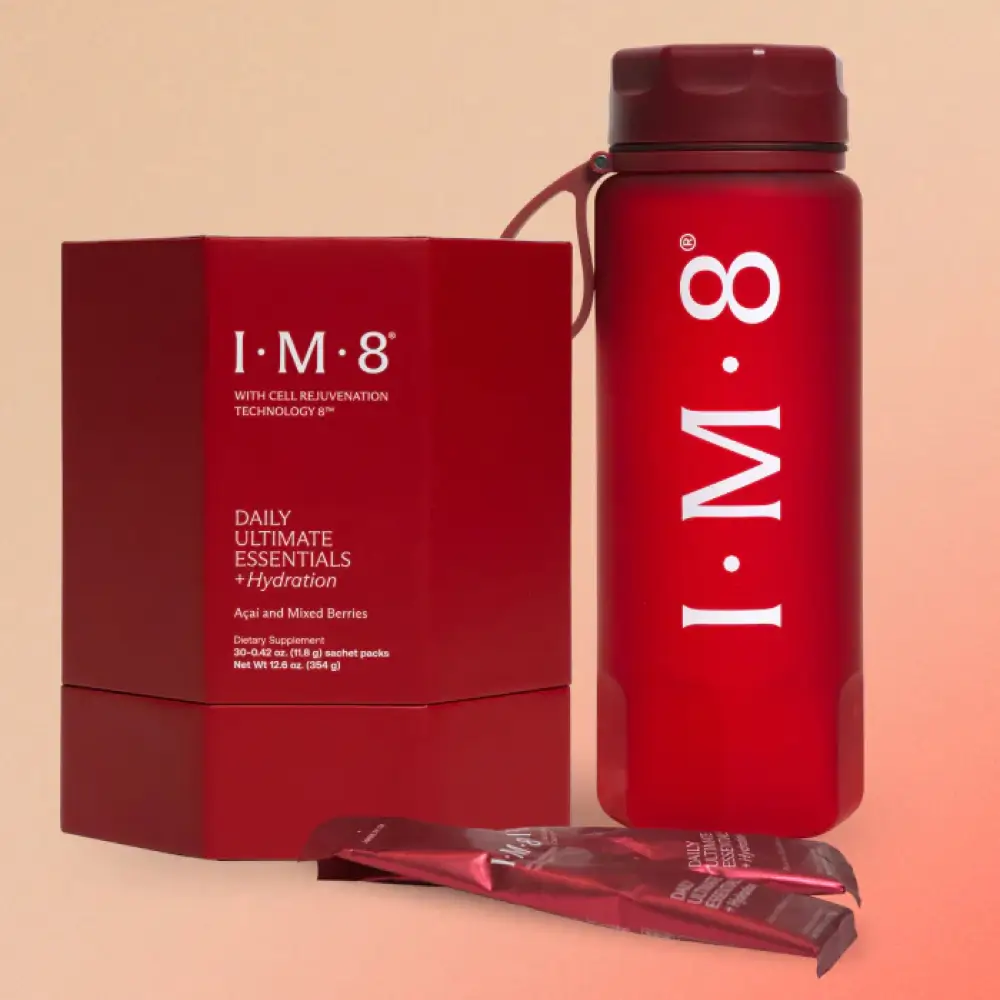
IM8 Health