



Tenzo Tea Review: Is the Rebuilt Matcha Range Worth Buying?
Tenzo Tea is an American brand selling Japanese matcha by grade, from a sweetened blend to three ceremonial references, with the origin, the cultivar and the caffeine published on each page. Here is our analysis of the rebuilt catalog, the real prices in dollars, the cost per cup and the US shipping and return terms, with the outdated claims on this page corrected.





Our verdict on Tenzo Tea in brief
Tenzo has rebuilt its catalog and this page had to be rebuilt with it. The 60 g Organic Matcha bundle at $50 and the Vanilla Matcha Latte mix are gone. The range is now sorted by grade, and the flagship is the Original Blend, a ceremonial-grade matcha at $15.00 for a box of 10 single-serve sticks, $19.99 for 30 servings, $49.99 for 100 and $125.00 for 400, which is $0.67 a cup falling to $0.31 on the largest size. Its page names the country, the region, Kagoshima Prefecture, the cultivar, a Yabukita-led blend, and the caffeine, 30 to 35 mg per serving.
That caffeine figure corrects the 72 mg and 144 mg numbers that used to appear here, which came from a full teaspoon rather than the brand's half-teaspoon serving. Two other claims have been dropped because they cannot be found on the store today: the Uji, Kyoto origin, contradicted by the Kagoshima line on the product page, and the FSSC 22000 certified facility, which a site search does not return. For an American reader the terms are good: free shipping above $40 and a single 60-day return window with a prepaid label.


In this full review we go through the rebuilt catalog, the grades, the real dollar prices, the cost per cup and the shipping and return terms at Tenzo Tea, blend by blend, based on the brand's own store pages.
Brand scores
Product scores
User experience
Shipping and customer service
Our analysis of Tenzo Tea: the blends under the microscope
This page is an analysis of the official Tenzo Tea store, not a tasting: product pages, grades, gram formats, price grids, the shipping banner and the refund policy, all read on tenzotea.co. Tenzo is an American brand with a US store priced in dollars, so an American reader can buy directly, with free shipping above $40.
Start with the correction that matters most, because it changed everything on this page. The catalog has been rebuilt. The 60 g Organic Matcha bundle at $50 and the Vanilla Matcha Latte mix no longer exist. The range is now organized by grade, from a sweetened blend to three ceremonial-grade matchas, and the flagship is the Original Blend at $19.99 for 30 servings.
📌 Original Blend: the new flagship
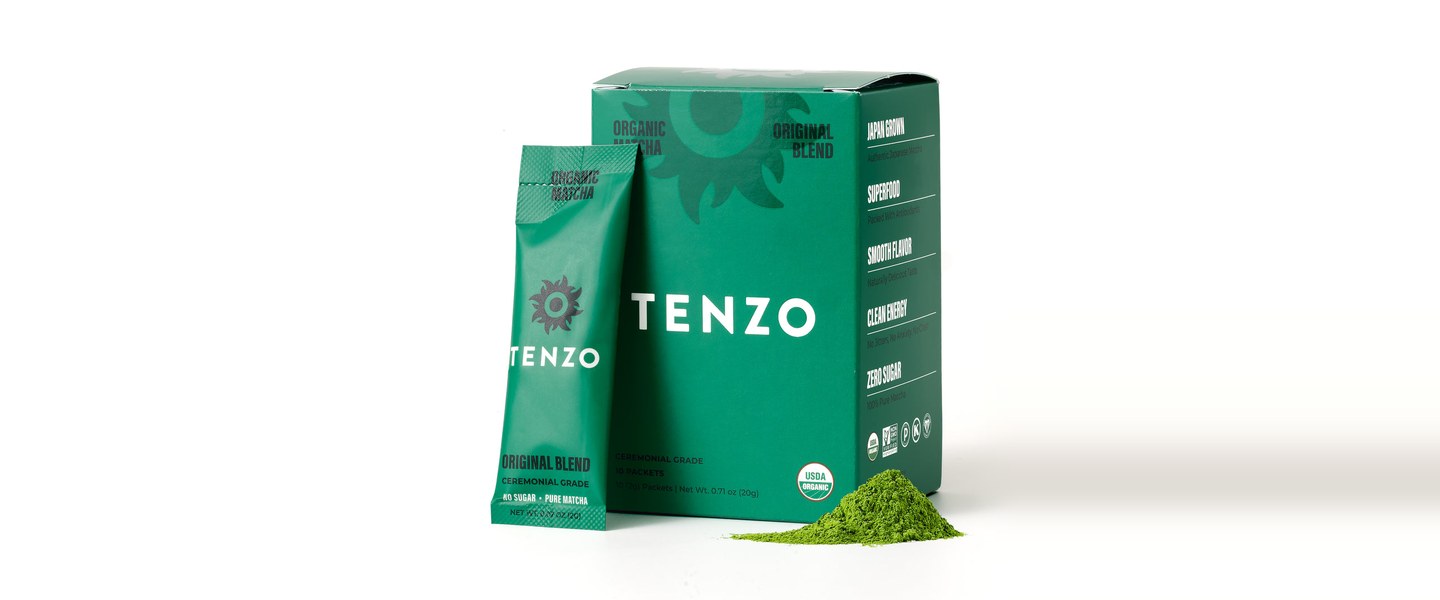
Original Blend is the ceremonial-grade reference and the entry point into the brand. The product page publishes what most matcha sellers keep vague: country Japan, region Kagoshima Prefecture, cultivar a Yabukita-led blend, first and second flush leaves, stone-ground, and a caffeine content of 30 to 35 mg per serving. That last figure is the one to remember, because the 72 mg and 144 mg numbers that circulated on this page came from a full teaspoon, while the brand's own serving is half a teaspoon.
Prices, in dollars: $15.00 for a box of 10 single-serve sticks at 2 g each, $19.99 for 30 servings, $49.99 for 100 and $125.00 for 400, with a 20% subscription discount on every option. That works out at about $0.67 a cup on the 30-serving size, $0.50 on the 100 and $0.31 on the 400, against $1.50 for the single-serve sticks. Preparation is half a teaspoon whisked with an ounce of warm water then topped with 5 to 7 ounces, and the brand advises against boiling water and recommends sifting first.
📌 Premium Blend, Sweet Blend and Better Boost: the everyday tier
Below the ceremonial grade sit the blends built for lattes and volume. Premium Blend is $9.99 for 30 servings, $45.00 for 100 and $78.64 for 500, which is the cheapest matcha in the range at about $0.16 a cup on the largest size. Better Boost Blend is $9.49 for 30 servings. Sweet Blend, the only sweetened reference, is $9.99 for 15 servings, $15.00 for a box of 10 single-serve sachets and $39.99 for 100 servings.
The distinction is worth respecting. A sweetened blend is a different product from a ceremonial matcha, in composition and in what it costs per gram of actual tea, and the brand at least labels each reference by grade. If you are comparing Tenzo with another matcha, compare grade to grade.
📌 Private Reserve, Takara Reserve and Hojicha: the top and the outlier
Two ceremonial references sit above the Original Blend. Private Reserve is $29.99 for 30 servings, and Takara Reserve, presented as the newest arrival, is $34.90 for 30 servings and $144.00 for 250. At about $1.16 a cup on the small size, Takara is a special-occasion purchase rather than a daily one.
The Hojicha Blend is the outlier and an interesting one: a roasted, stone-ground hojicha the brand describes as nutty, mellow and naturally low in caffeine, at $21.90 for 30 servings and $68.90 for 250. It is the reference to look at for an evening drink, since roasting reduces the caffeine that a ceremonial matcha delivers in full.
The verdict on format and dosing
Tenzo's format ladder is the clearest part of the brand. Every blend is sold by number of servings rather than by an ambiguous pouch size, the single-serve sticks give a real trial route, and the large formats bring the cost per cup down sharply. The matchaware line completes it, with a bamboo whisk at $14.00, a whisk stand at $12.00, a sifter at $9.99, a matcha bowl at $25.00, an electric mixer at $11.00, a scooper at $5.00 and a shaker bottle at $14.00.
One thing to check before ordering: the store contradicts itself on the free-shipping threshold. The site banner and the cart drawer both say free shipping on orders over $40, while a badge on the product page says over $50. The cart is the authority.
Effectiveness and what to expect
Matcha is a drink, not a supplement, and Tenzo mostly treats it that way. What the product page commits to is measurable: a stated caffeine content, a cultivar, a region, a grinding method. The brand talks about steady, sustained energy and a daily ritual, which describes a common experience with the caffeine and L-theanine combination in green tea rather than a guaranteed effect. Nothing on the store is presented as a treatment.
The practical reading for a buyer: 30 to 35 mg of caffeine per serving is roughly a third of a standard cup of coffee, so a matcha habit is easy to build without a heavy caffeine load, and a single-serve stick at 2 g is double that. Anyone sensitive to caffeine, pregnant or managing sleep, reflux or blood pressure should count matcha alongside everything else in the day, and the Hojicha Blend is the low-caffeine option in the range.
Who is Tenzo Tea?
Tenzo is an American matcha brand that tells its origin story as college athletes turned matcha founders, looking for better energy and finding a daily ritual instead. It says it works directly with multi-generational tea partners across Japan, and the Original Blend page names its region, Kagoshima Prefecture, and its cultivar. The store also runs a wholesale program for cafes and restaurants.
Two claims that used to appear on this page could not be found on the store today and have been removed rather than repeated. The matcha is not described as coming from Uji, Kyoto; the word appears only in two educational blog posts, while the product page says Kagoshima. And there is no mention anywhere of an FSSC 22000 certified facility; a site search returns no result for it. On reviews, the on-site widget shows 20 for the Original Blend, while the Trustpilot profile is essentially empty, so the on-site figures are all there is.
📌 Key commitments
- Origin published per product: country, region and cultivar, with Kagoshima Prefecture on the Original Blend
- Caffeine content stated per serving, 30 to 35 mg on the ceremonial blend
- Products sold by number of servings, not by an ambiguous pouch size
- Direct relationships with multi-generational Japanese tea partners, according to the brand
- Free US shipping above $40 and a 20% subscription discount on every order
- A 60-day return window with a prepaid return label
Original Blend against a supermarket culinary matcha
| Criteria |
Analyzed by TBS
Tenzo Original Blend
|
Supermarket culinary matcha
|
|---|---|---|
| Grade | ✅Ceremonial, first and second flush, stone-ground | ❌Culinary grade, later harvests |
| Origin published | ✅Japan, Kagoshima Prefecture, Yabukita-led blend | ❌Country at best, often nothing |
| Caffeine stated | ✅30 to 35 mg per serving on the page | ❌Almost never published |
| Price per cup | ❌About $0.67 at 30 servings, $0.31 at 400 | ✅Often under $0.20 |
| Trial format | ✅Box of 10 single-serve 2 g sticks at $15.00 | ❌One pouch size only |
| Ships to the United States | ✅Yes, free above $40, 60-day returns | ✅Yes, on every US shelf |
The table says what you are paying for: a published origin, a published cultivar and a published caffeine figure, none of which a supermarket tin gives you. You are not paying for a cheaper cup, and Tenzo's own Premium Blend at $78.64 for 500 servings is the answer if price per cup is what you care about. The last line is the easy part here, since this is a domestic US store.
The Tenzo Tea range
Seven matcha references, arranged by grade. Sweetened: Sweet Blend, $9.99 for 15 servings, $15.00 for a box of 10 sachets, $39.99 for 100. Premium grade: Better Boost Blend at $9.49 for 30 servings and Premium Blend at $9.99 for 30, $45.00 for 100 and $78.64 for 500. Ceremonial grade: Original Blend at $15.00 for the single-serve box, $19.99 for 30 servings, $49.99 for 100 and $125.00 for 400; Private Reserve at $29.99 for 30; Takara Reserve at $34.90 for 30 and $144.00 for 250. Deep roast: Hojicha Blend at $21.90 for 30 and $68.90 for 250.
Around them, the matchaware line covers everything the preparation needs, from the $5.00 scooper to the $25.00 bowl with a pour spout, and a merchandise line exists but is out of stock across the board. Two things the previous version of this page listed are gone: the 60 g Organic Matcha bundle at $50 and the Vanilla Matcha Latte mix.
Composition breakdown: what the blends are actually made of
Blend by blend
The Original Blend is ceremonial-grade green tea powder and nothing else, from first and second flush leaves of a Yabukita-led cultivar blend grown in Kagoshima, stone-ground in the traditional way. Private Reserve and Takara Reserve sit in the same grade with a narrower selection. Premium Blend and Better Boost Blend are the same plant in a lower grade, aimed at lattes. Hojicha is a different tea altogether, roasted rather than shaded, which is why the brand describes it as naturally low in caffeine. Sweet Blend is the one reference that is not pure tea, since it is sweetened.
Active by active
There is little to break down in a single-ingredient tea powder, and that is the point. Matcha naturally carries caffeine, L-theanine and catechins, and because the leaf is drunk whole rather than infused, a cup delivers more of all three than a steeped green tea. Tenzo publishes the caffeine, 30 to 35 mg a serving, but not the L-theanine or catechin content, which no one in this category publishes either. What is missing is a lot-specific certificate of analysis: for a Japanese tea powder, pesticide residues and heavy metals are the numbers worth asking for.
Buying Tenzo Tea from the United States
This is a US store, priced in dollars, so there is no customs or currency question. Shipping is free above $40 according to the site banner and the cart drawer, and one-time orders below that are charged at checkout, while subscriptions ship free every month and carry a 20% discount on every order. The brand states that orders normally leave within one business day.
The return terms have improved and the older wording on this page was wrong. The refund policy, last updated on 25 August 2026, gives a single 60-day window from the purchase date, with no separate 30-day rule; you email support first, and an approved return comes with a prepaid shipping label. Products should generally be unused, unopened and in their original packaging, and sale or bundle items may follow the terms of their promotion. Code LIONSMANE37381 asks for 20% off eligible orders, the same percentage as the subscription, so on a first order the subscription wins by the shipping fee while the code wins on freedom, and the two do not stack.
We placed Organic Matcha second in our ranking of the best matcha powder for lattes, where what the label actually discloses does most of the work.
Technical analysis and expert verdict
Tenzo does the transparency work that most matcha sellers avoid. Naming the prefecture, the cultivar and the flush on a product page, stating the caffeine per serving, selling by number of servings rather than by pouch size, and offering a box of single-serve sticks so a first purchase costs $15.00 instead of $50: that is a well built shelf. The grade labels are honest, the format ladder brings the ceremonial blend down to $0.31 a cup at 400 servings, and the US terms are generous, free shipping above $40 and a 60-day return with a prepaid label.
The limits are documentation and consistency. No lot-specific certificate of analysis is published, which is the one thing that would settle the pesticide and heavy metal question on an imported tea powder. The store contradicts itself on the free-shipping threshold, $40 in the banner and $50 on a product badge. And independent reviews are almost nonexistent, so the on-site counts, 20 for the Original Blend, are all a buyer has. For a first order, the single-serve box at $15.00 or the 30-serving Original Blend at $19.99 are the right entry points, and Premium Blend at $78.64 for 500 servings is the value play for anyone drinking matcha daily.
The Tenzo Tea flagship products
📌 Original Blend
The brand's ceremonial-grade flagship and the product that replaced the old 60 g bundle: first and second flush leaves from Kagoshima Prefecture, a Yabukita-led cultivar blend, stone-ground, with 30 to 35 mg of caffeine per serving stated on the page. It costs $15.00 for a box of 10 single-serve 2 g sticks, $19.99 for 30 servings, $49.99 for 100 and $125.00 for 400, which is about $0.67 a cup on the 30-serving size and $0.31 on the largest. Subscribing takes 20% off every order.
📌 Premium Blend
The value reference for anyone drinking matcha every day: premium grade rather than ceremonial, built for lattes, at $9.99 for 30 servings, $45.00 for 100 and $78.64 for 500, which is about $0.16 a cup on the largest size. If you want the lowest caffeine in the catalog instead, the roasted Hojicha Blend is $21.90 for 30 servings.
Code LIONSMANE37381 asks for 20% off eligible orders on the official Tenzo store, the same percentage as the subscription, which also ships free.
Go further: browse the Tenzo Tea Matcha brand page with the full product list, the Tenzo Tea Matcha promo code LIONSMANE37381 and the Organic Matcha - Tenzo Tea Matcha product sheet.
Our final verdict: should you buy from Tenzo Tea?

The Best Supplements' editorial guidelines guarantee transparency and reliability: all our content is written by industry specialists and validated against 7 key criteria*, so every publication delivers quality information, promo codes, and reviews.
To support The Best Supplements, links on this site are affiliate links: we may earn a commission when you buy through these links, at no extra cost to you. By using the site you accept our terms of use and our editorial policy.

🎁 Want a -50% promo code you won't find anywhere else?
We negotiated an exclusive -50% promo code for you with a very well-known mushroom coffee brand. Interested? Subscribe and get your code straight to your inbox.
The 7 key criteria behind our reviews
Every piece of content published on The Best Supplements is carefully written by passionate experts, following a rigorous process. The Best Supplements is committed to providing information that is reliable, useful, and enjoyable to read.
Specialized, committed writers


Rigorous research behind every fact
Full transparency on sources
Focused on your real needs
Original, authentic content
Articles updated continuously
Compliance with standards and editorial ethics

Our favorite brand this month 🧡
Our pick of the month, one to try without hesitation.
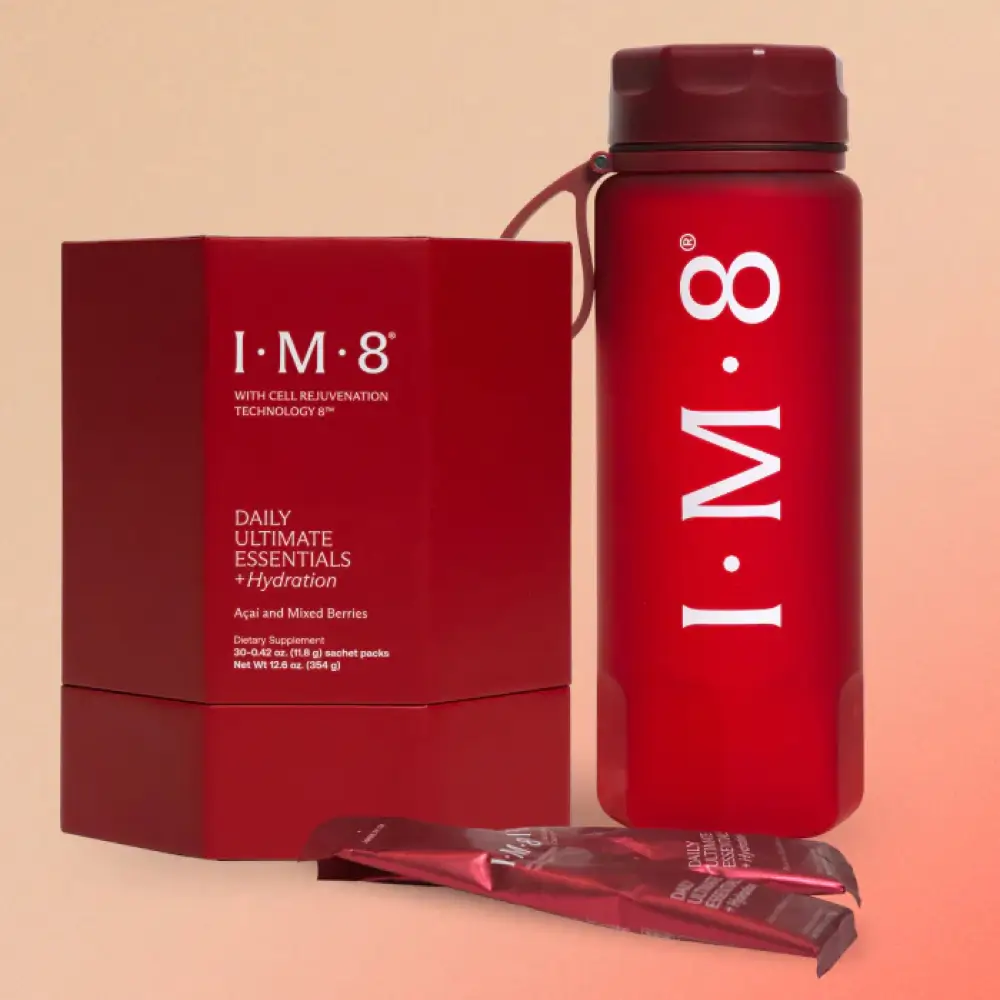
IM8 Health